
What Is HACCP?
In food manufacturing, every stage — from raw material inspection, processing, packaging, storage, to transportation — can directly impact food safety and product quality. As global food safety regulations become increasingly stringent, food manufacturers must not only improve production efficiency, but also establish comprehensive food safety management systems to reduce contamination risks and prevent food safety incidents.
In recent years, HACCP has become one of the most widely adopted food safety management systems in the global food industry. It is commonly applied in food processing plants, central kitchens, frozen food production, meat processing, seafood processing, bakery products, and ready-to-eat food manufacturing. At the same time, many international markets and food certification systems regard HACCP as a fundamental requirement for food safety management.
Below, we have compiled common HACCP FAQs to help businesses better understand HACCP systems and key food safety management concepts.
FAQ
Q1 What Is HACCP?
HACCP (Hazard Analysis and Critical Control Point) is a systematic food safety management system designed to help food manufacturers establish standardized food safety control procedures through hazard analysis and Critical Control Point (CCP) management. Today, HACCP is widely applied across industries such as food processing, central kitchens, frozen foods, meat processing, seafood processing, and bakery products, and has become one of the most commonly adopted food safety management systems in the global food industry.
Q2 What Is the Purpose of Implementing a HACCP System?
The primary purpose of implementing a HACCP system is to identify potential risks in food production processes in advance and reduce the likelihood of food safety issues through preventive and monitoring measures. Compared to traditional quality management methods that focus mainly on final product inspection, HACCP emphasizes preventive control and continuous monitoring throughout the production process. This enables food manufacturers to establish a more comprehensive food safety management system across every stage, including raw material inspection, processing, packaging, storage, and transportation. Today, HACCP is also regarded as one of the core foundations for internationally recognized food safety certifications such as ISO 22000 and FSSC 22000.
Q3 What Hazards Does HACCP Manage?
HACCP hazard analysis mainly focuses on three major types of risks in food processing: biological hazards, chemical hazards, and physical hazards. Biological hazards include Salmonella, E. coli, Listeria, viruses, molds, and parasites, which are commonly associated with raw material contamination, improper temperature control, or cross-contamination. Chemical hazards include pesticide residues, cleaning agent residues, heavy metal contamination, improper use of food additives, and allergen cross-contact. These issues are often caused by raw material sources, equipment cleaning problems, or inadequate operational management. Physical hazards include metal fragments, plastic contaminants, glass, screws, and other foreign materials, which are commonly caused by equipment wear, human error, or damaged packaging materials.
Q4 What Are the Two Core Concepts of HACCP?
The HACCP system is primarily built upon two core concepts: Hazard Analysis (HA) and Critical Control Points (CCP). Hazard Analysis (HA) refers to the process of evaluating potential biological, chemical, and physical hazards that may occur throughout food production processes, as well as assessing the level of associated risks. Critical Control Points (CCP) are processing steps that have a direct impact on food safety and must be effectively controlled, such as frying temperature, sterilization procedures, cooling time, or metal detection. By establishing CCPs, setting critical limits, and implementing continuous monitoring procedures, food manufacturers can effectively reduce food safety risks.
Q5 What Are the Seven Principles of HACCP?
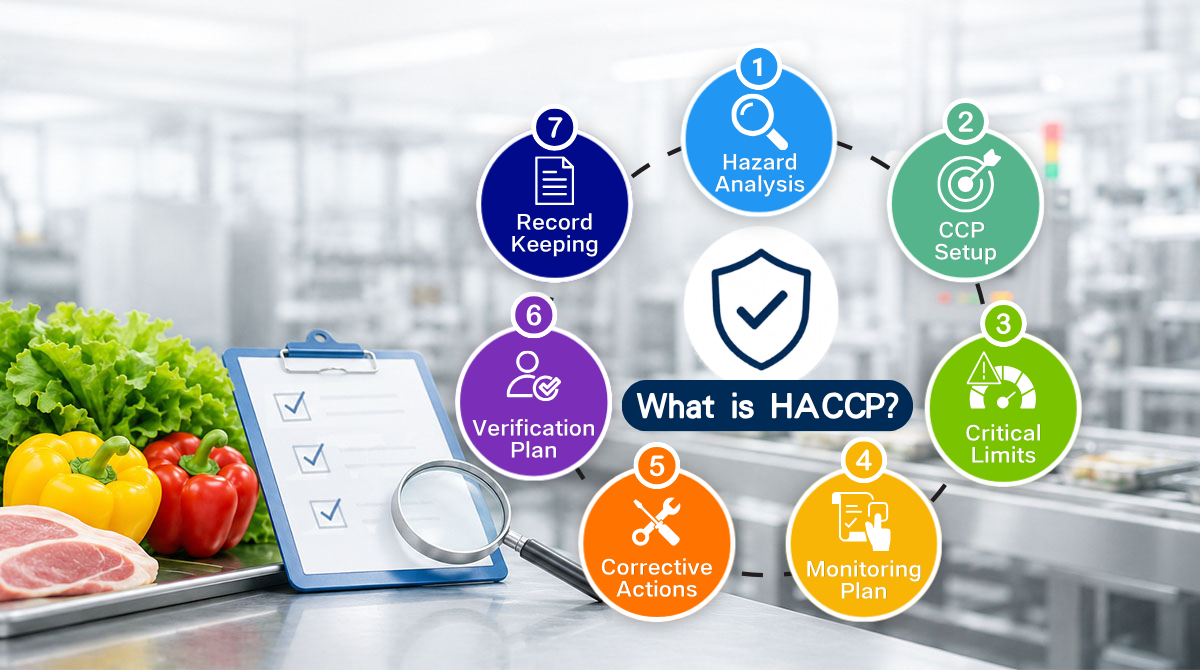
The HACCP system is built upon seven core principles, including hazard analysis, identifying Critical Control Points (CCPs), establishing critical limits, setting monitoring procedures, implementing corrective actions, establishing verification procedures, and maintaining proper documentation and record-keeping systems. The purpose of these seven principles is to establish a systematic and continuous food safety management and monitoring mechanism, shifting food safety management from end-product inspection to preventive control throughout the production process.
Q6 What Are the 12 Steps of HACCP?
The HACCP implementation process typically consists of five preliminary steps and the seven principles of HACCP, making a total of 12 steps. Before conducting hazard analysis, companies must first complete preliminary planning tasks, including establishing a HACCP team, describing product characteristics, identifying the intended use of the product, creating a process flow diagram, and verifying the flow diagram on-site. These steps provide an important foundation for subsequent risk analysis. After the preliminary preparation is completed, the company can then proceed to implement the seven HACCP principles, gradually establishing a complete food safety management system and documentation process while strengthening food safety traceability and regulatory compliance.
Q7 Which Industries Should Implement HACCP?
Any industry involved in food manufacturing, processing, storage, transportation, or supply chain management is suitable for implementing the HACCP food safety management system. Common industries include food processing plants, snack food manufacturing, meat processing, seafood processing, dairy products, bakery products, frozen foods, central kitchens, meal box factories, cold chain logistics, and food packaging-related industries. As food safety regulations continue to become more stringent, certain high-risk food industries in Taiwan are also legally required by regulatory authorities to establish HACCP systems.
Q8 What Are the Differences Between HACCP, ISO 22000, and FSSC 22000?
HACCP mainly focuses on hazard analysis and Critical Control Point (CCP) management within food production processes, with the core objective of reducing food safety risks. ISO 22000 is built upon the HACCP framework and further integrates the concept of a Food Safety Management System (FSMS). It covers organizational management, documentation control, risk management, and continual improvement, making food safety management more systematic and structured. FSSC 22000 is an internationally recognized food safety certification scheme developed based on the ISO 22000 framework. It includes more comprehensive Prerequisite Programs (PRPs) and additional food safety requirements, which is why many large international food companies regard it as a higher-level food safety certification standard.
Q9 Does Obtaining ISO 22000 Certification Mean a Company Is HACCP Compliant?
Yes. The ISO 22000 Food Safety Management System already incorporates the core principles of HACCP. Therefore, when companies implement ISO 22000, they typically establish a HACCP system at the same time. In simple terms, HACCP focuses on hazard control within food production processes, while ISO 22000 builds upon HACCP to establish a more comprehensive food safety management system.
Q10 What Are the Practical Benefits of Implementing HACCP in Food Factories?
By establishing a comprehensive hazard analysis and Critical Control Point (CCP) management system, companies can proactively prevent food contamination, process abnormalities, and food safety incidents, while reducing defect rates, customer complaints, and product recall risks. In addition, HACCP helps establish standardized operating procedures and complete documentation management, improving product quality consistency, internal management efficiency, and audit success rates, while also strengthening a company’s competitiveness in international markets. The greatest value of HACCP lies in shifting food safety management from “post-production inspection” to “preventive control,” helping businesses reduce operational risks and enhance brand trust.