How Should Fryer and Burner Exhaust Pipes Be Installed?
When planning an industrial fryer and burner system, the exhaust pipe is often underestimated. In reality, however, it directly affects combustion efficiency, temperature control stability, and the overall lifespan of the equipment. You can think of the burner as a body in motion, while the exhaust system serves as its breathing mechanism. Once exhaust flow is restricted, even the most advanced equipment cannot perform at its full potential. Therefore, exhaust pipe design should not be treated as a secondary consideration, but rather as an integral part of the overall process and system design. Below, we address some common questions and provide additional insights based on practical industry experience.
FAQ
Q1 What Problems Can Result from Poor Exhaust Pipe Design?
In actual production environments, many issues such as unstable combustion, abnormal temperature control, and reduced equipment efficiency can often be traced back to improper exhaust system design.
When exhaust gases cannot be discharged smoothly, pressure inside the furnace becomes unbalanced, which negatively affects combustion efficiency and may significantly increase the risk of fire. In frying applications, oil fumes generated during the process can gradually accumulate inside the exhaust duct and form grease deposits. These combustible residues may become potential ignition sources if not properly managed. In addition, exhaust gas temperatures typically range from 400°C to 500°C (752°F to 932°F). If the exhaust pipe materials and structural design are not properly planned, further safety hazards may arise.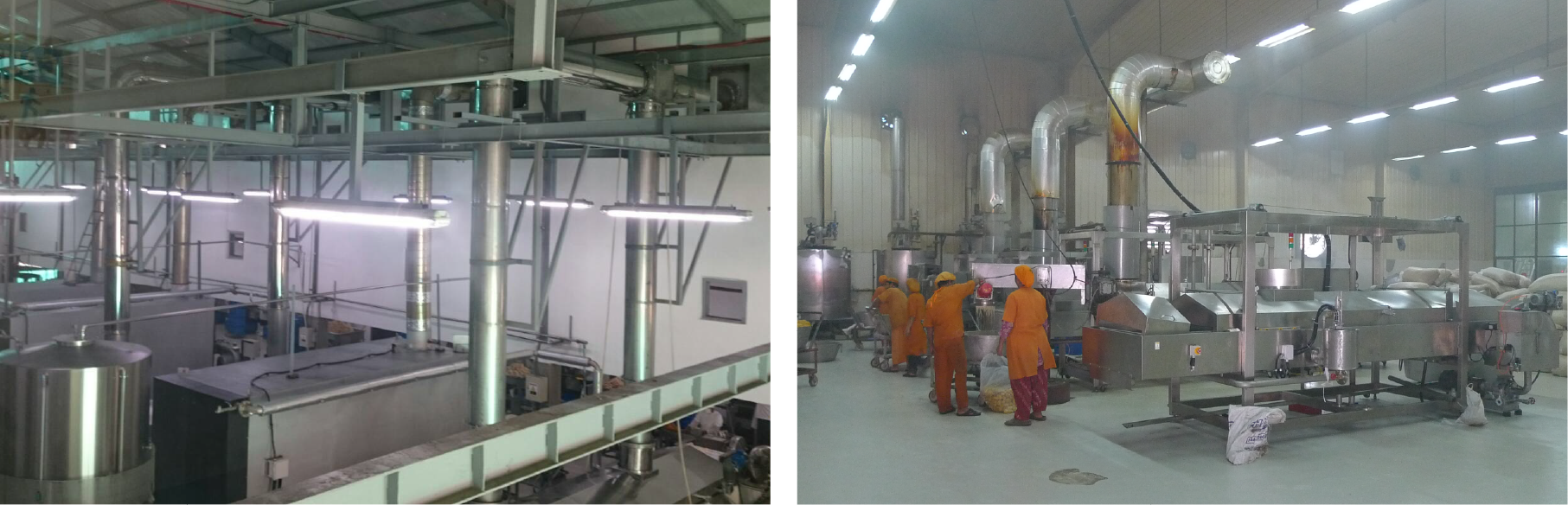
Q2 What Are the Basic Principles of Exhaust Pipe Design?
The core principle of exhaust system design is ensuring smooth and efficient airflow. In practice, engineers generally follow the rule of “short, straight, and with minimal bends” to allow high-temperature exhaust gases to be discharged with the least possible resistance.
Excessively long ductwork or too many bends can increase pressure loss and the likelihood of grease and residue buildup, gradually reducing exhaust efficiency over time. In addition, the exhaust pipe diameter must be properly matched to the equipment's requirements. A pipe diameter that is too small may result in excessive airflow velocity and unstable pressure, while an oversized pipe can lead to insufficient airflow velocity and exhaust gas stagnation. Both situations can directly affect combustion performance and overall thermal efficiency.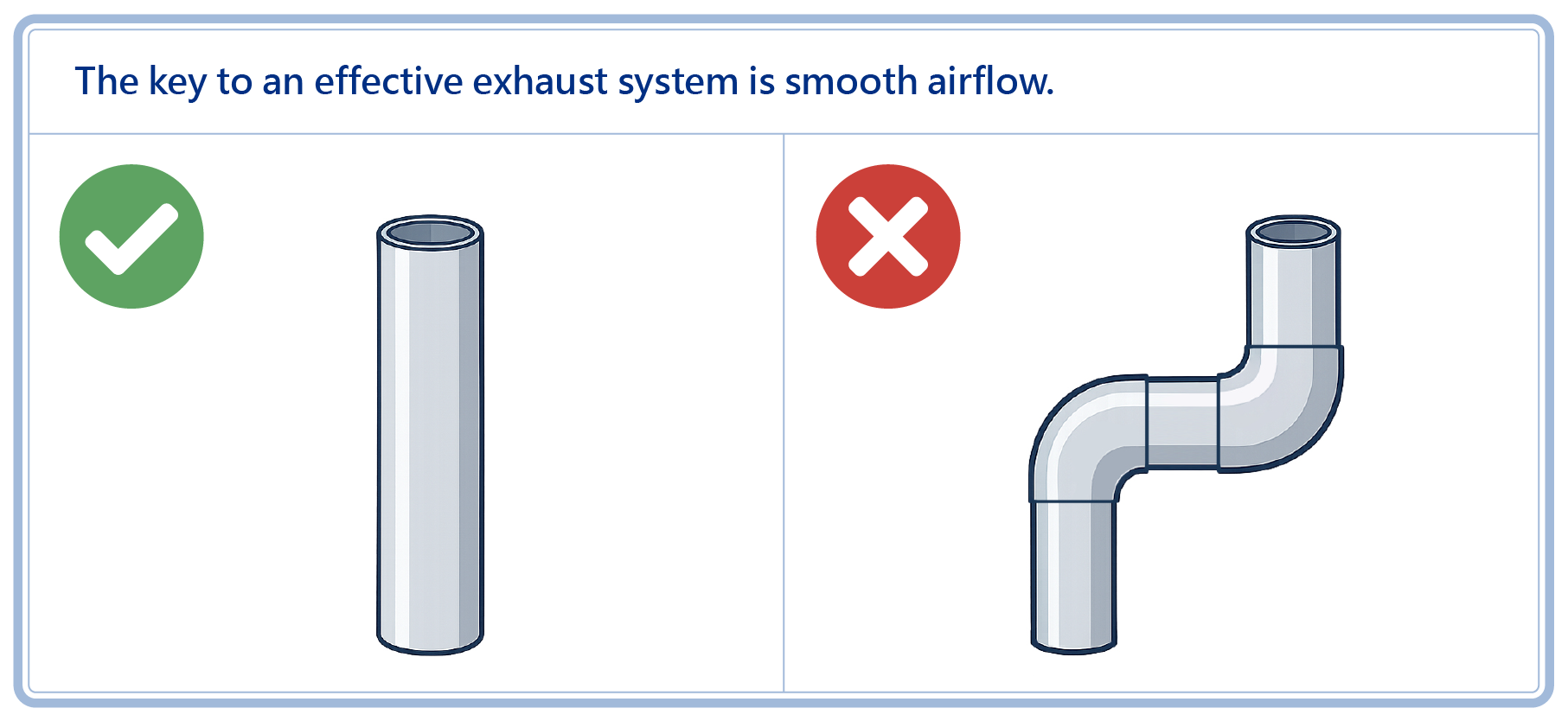
Q3 How Should the Height and Direction of an Exhaust Outlet Be Planned?
The location of the exhaust outlet directly affects the efficiency of exhaust gas discharge. If the outlet is installed too low, or positioned on the windward side of a building or within an area of turbulent airflow, external wind pressure may interfere with the exhaust flow, causing backdraft or smoke recirculation.
As a general guideline, the exhaust outlet should extend at least 1 meter above the roof level and, whenever possible, adopt a vertical upward discharge design to allow exhaust gases to disperse naturally. In addition, adequate distance should be maintained between the exhaust outlet and air intakes, HVAC systems, and neighboring buildings to prevent exhaust gases from being drawn back into indoor environments.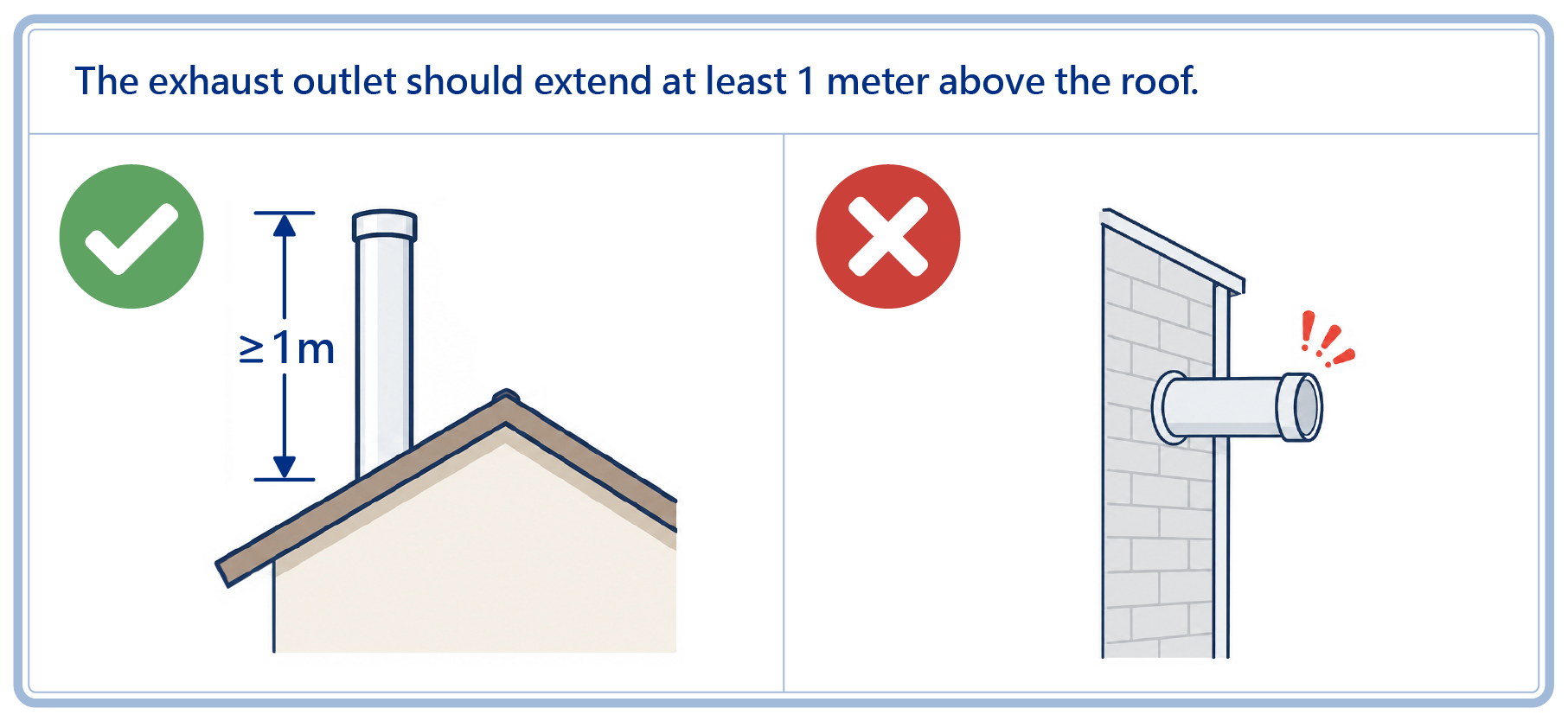
Q4 Can Industrial Fryers and Burners Share the Same Exhaust Pipe?
Due to space limitations or cost considerations, some factories may attempt to connect multiple burners or frying systems to a shared exhaust pipe. However, without proper airflow and pressure calculations, this approach can present significant operational risks.
Different types of equipment generate exhaust gases with varying flow rates, temperatures, and pressure characteristics. As a result, they may interfere with one another, leading to situations where one unit exhausts too strongly while another experiences insufficient exhaust flow. Therefore, unless the system has been professionally designed and balanced through detailed engineering calculations, it is generally recommended that each piece of equipment be equipped with its own independent exhaust system to ensure stable and reliable operation.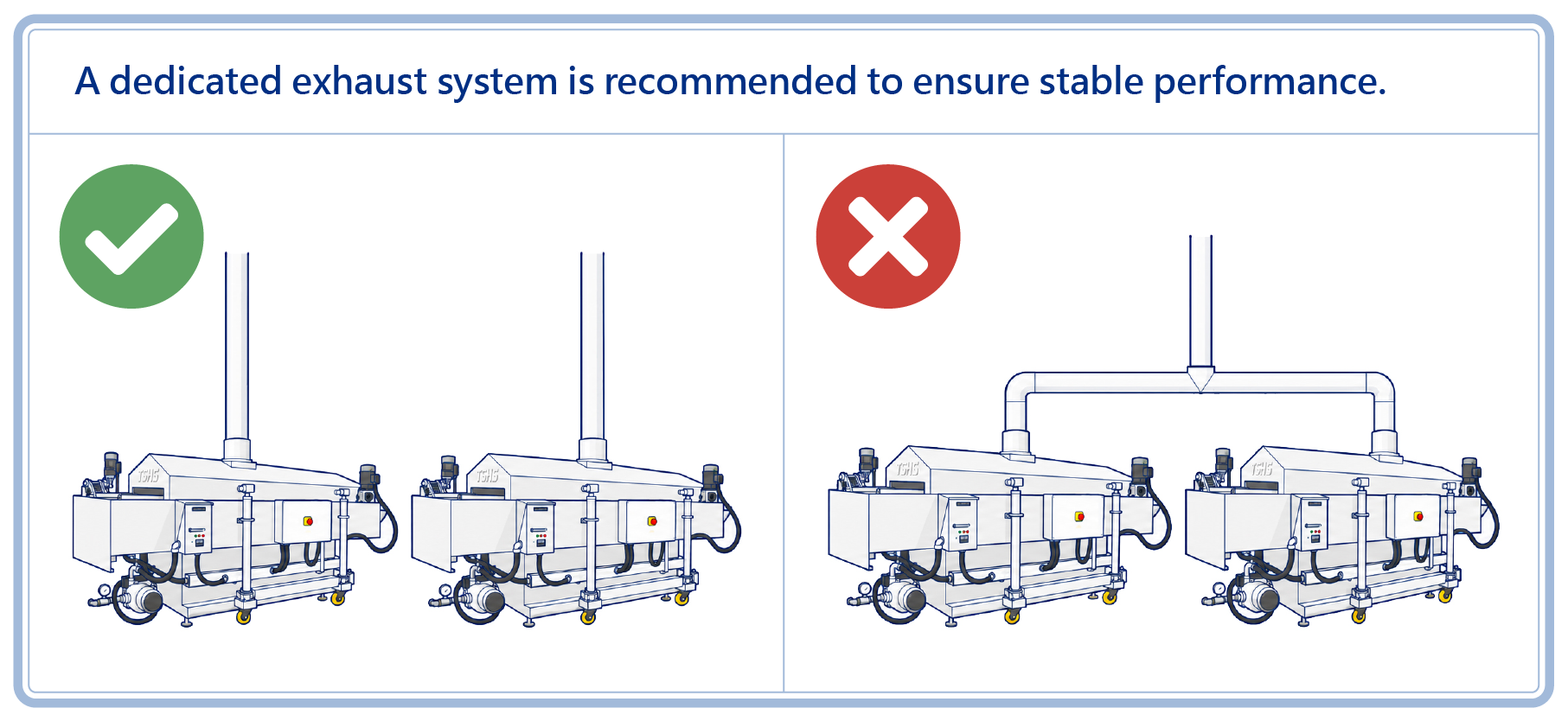
Q5 Does the Exhaust Pipe Require Regular Cleaning and Maintenance?
Large amounts of oil fumes are generated during the frying process. Over time, grease and carbon deposits can accumulate on the inner walls of the exhaust pipe. If not cleaned regularly, these deposits can gradually increase airflow resistance, reduce exhaust efficiency, and even become a potential fire hazard. Therefore, it is recommended to conduct a comprehensive cleaning and inspection at least once every six months. In addition, cleaning access ports and sufficient maintenance space should be incorporated into the exhaust system design to facilitate future inspection, cleaning, and servicing.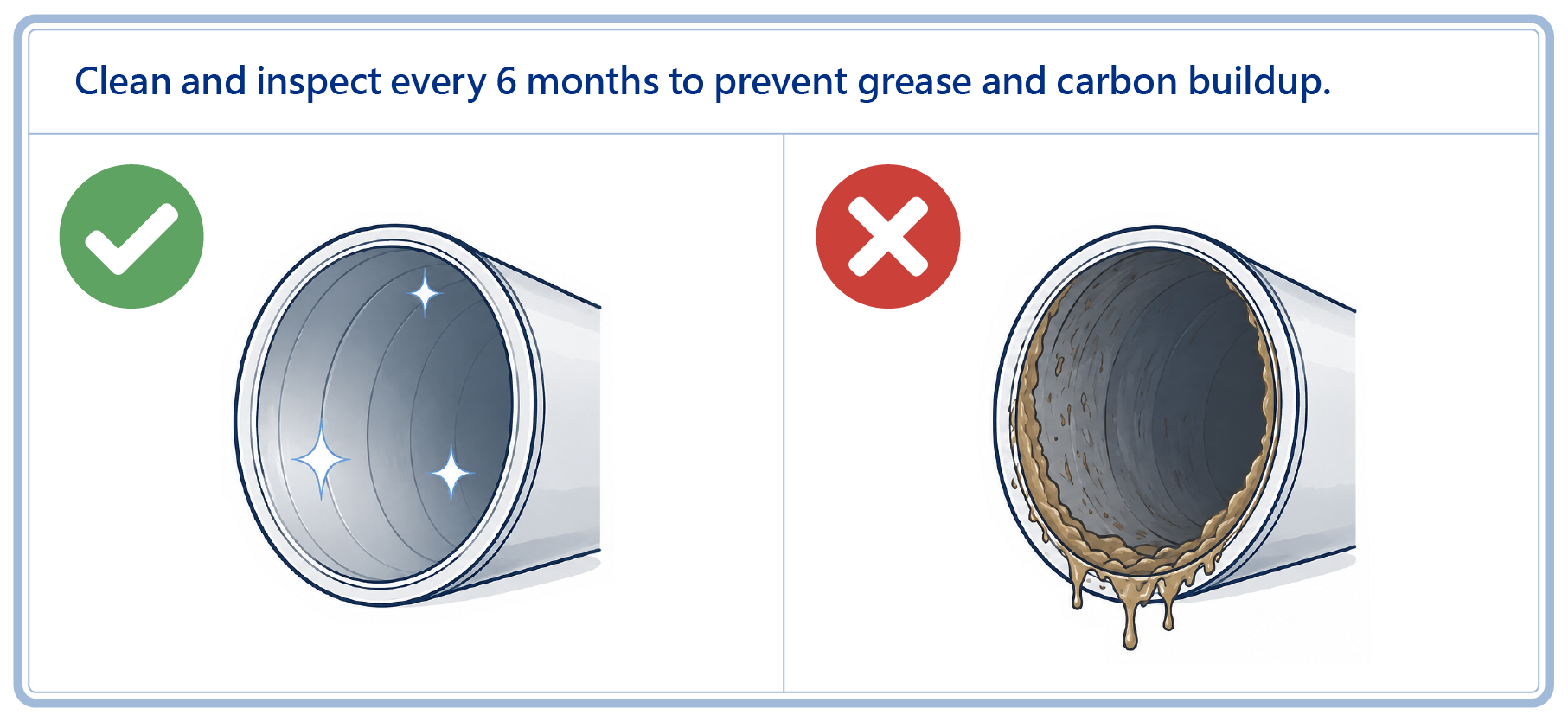
Q6 Is It Necessary to Install a Backdraft Damper or Exhaust Fan?
When the exhaust outlet is located on the windward side of a building or in an area exposed to significant wind pressure, a backdraft damper can effectively prevent outside air from flowing back into the system, helping to maintain stable operation. In cases where the exhaust duct is relatively long or airflow resistance is high, natural ventilation alone may not provide sufficient exhaust performance. Under such circumstances, an exhaust fan can be installed to assist with exhaust gas removal.
However, the fan capacity must be carefully calculated and matched to the system requirements. Excessive suction can disrupt the pressure balance inside the furnace, while insufficient suction may result in exhaust gas accumulation and poor exhaust performance. Therefore, proper engineering calculations are essential to ensure optimal system operation.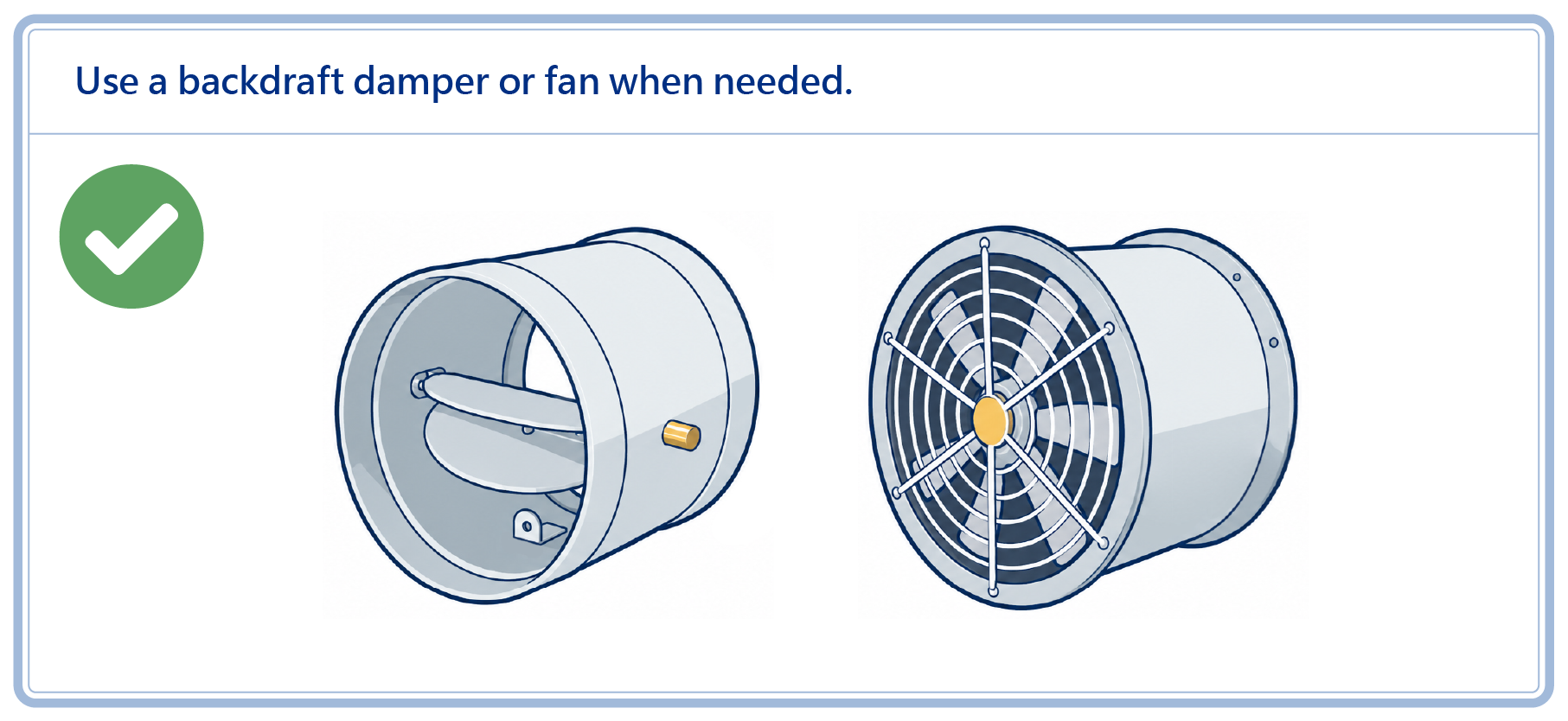
Q7 Besides Duct Design, What Other Factors Affect Exhaust Performance?
The effectiveness of an exhaust system does not depend solely on the ductwork itself. One critical factor that is often overlooked is the make-up air system. If a facility only exhausts air without providing sufficient fresh air intake, a negative pressure environment can develop inside the building. This can make it more difficult for exhaust gases to be discharged efficiently and may even reduce combustion efficiency.
For this reason, a well-designed exhaust system should be accompanied by an adequate make-up air system to maintain proper airflow balance, ensure stable combustion, and achieve optimal exhaust performance.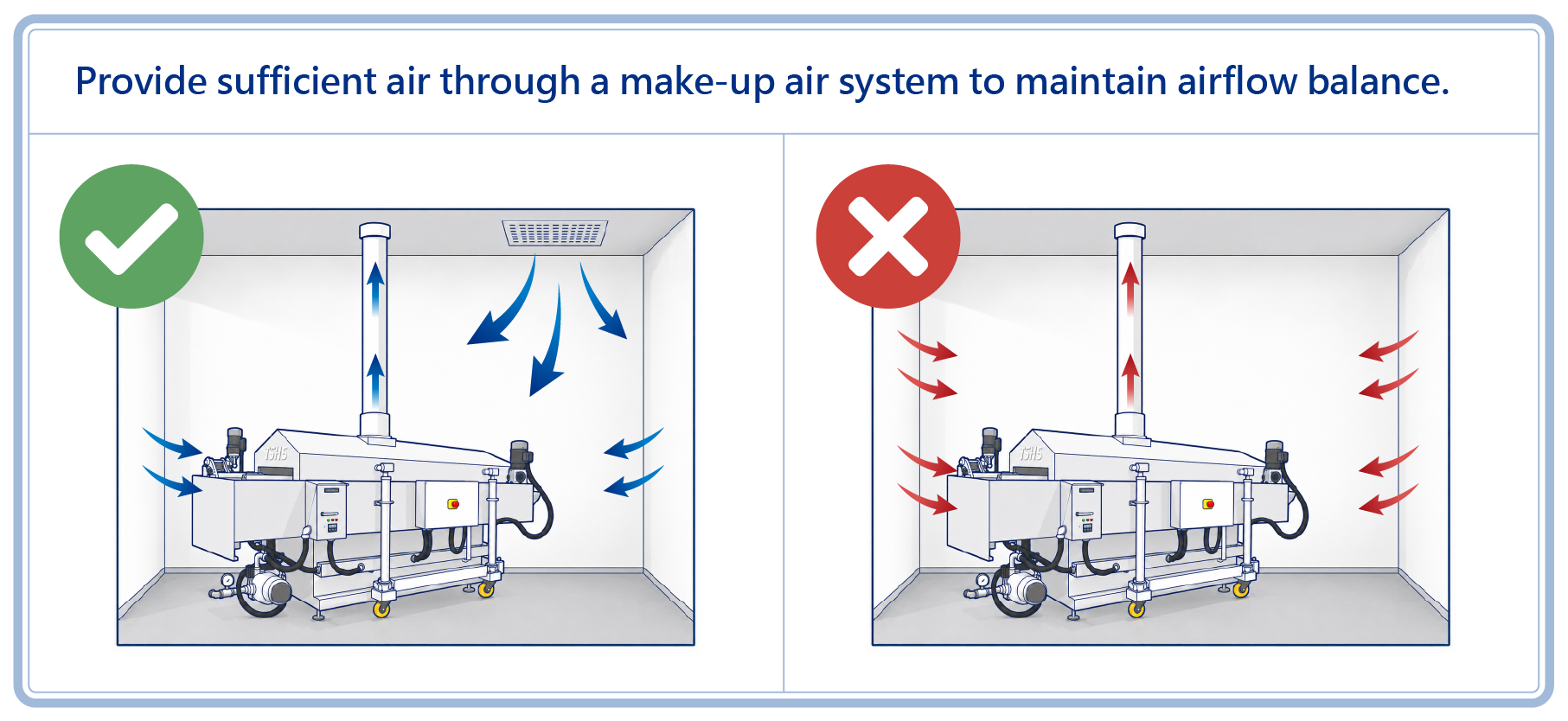
Q8 What Safety Considerations Should Be Taken into Account When Designing an Exhaust Pipe System?
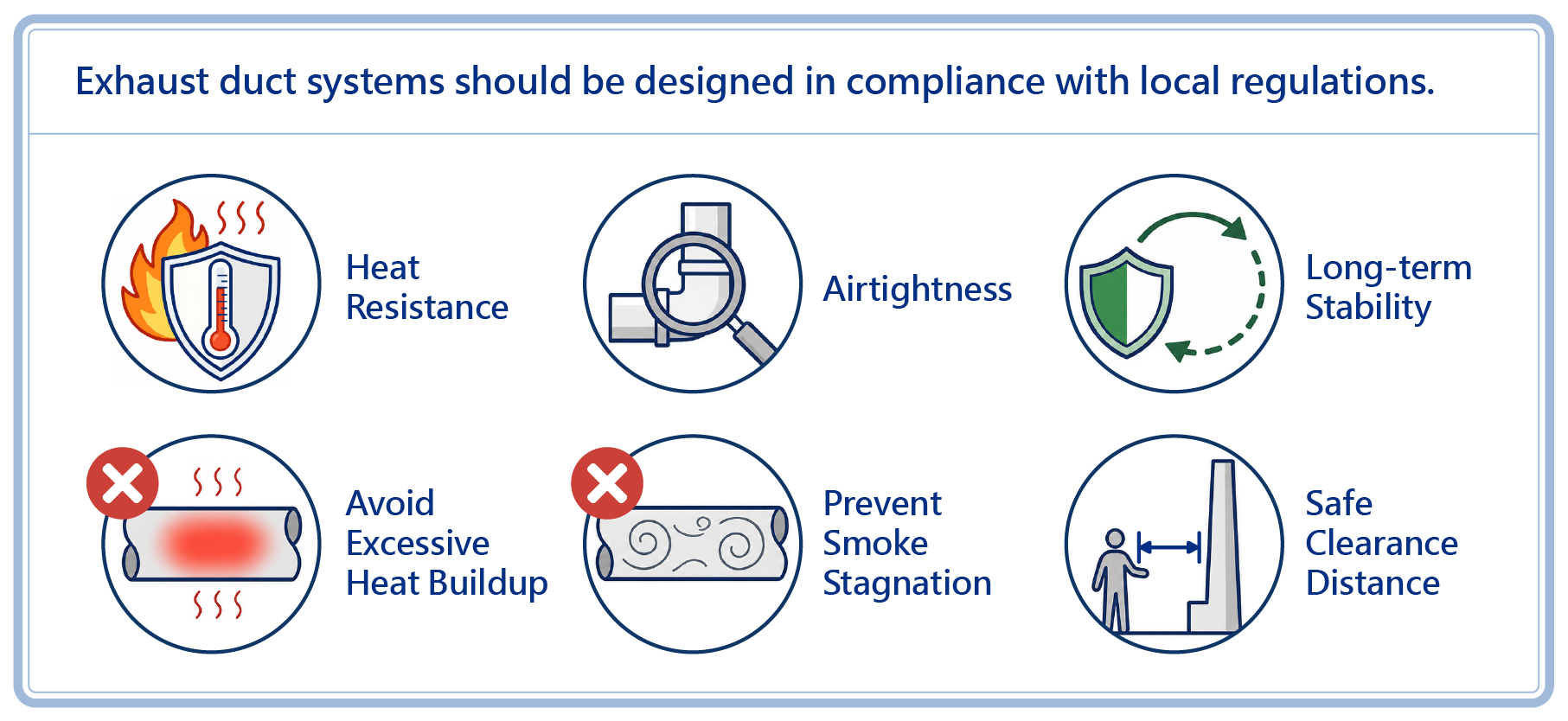
Exhaust systems operate continuously in environments exposed to high temperatures and oil fumes. In practical applications, priority should be given to the system's heat resistance, airtightness, and long-term operational stability. The design should also ensure that no abnormal heat accumulation or exhaust gas stagnation occurs during operation. In addition, sufficient safety clearance should be maintained around the exhaust pipe system to minimize potential impacts on personnel, nearby equipment, and surrounding facilities.
As safety regulations for exhaust systems vary between countries and industries, it is recommended that the actual design and installation be carried out in accordance with local codes, regulations, and professional engineering assessments to ensure overall system safety and compliance.