
Airbag Fabric Drying and Recycling Application (Japan) | Processing Machinery & Turnkey Project Supply | TSHS
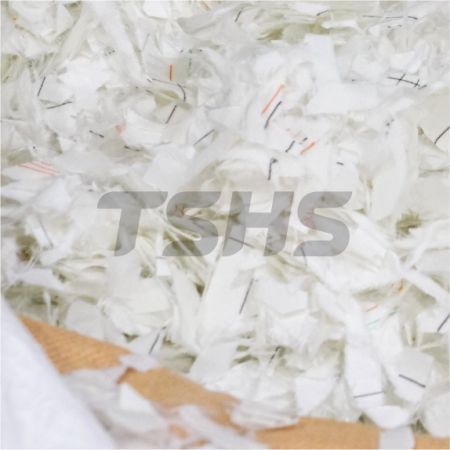
Amid the rapid growth of Vietnam’s automotive material recycling industry, the drying of airbag fabric has become a critical step in recycling and reprocessing production lines. After shredding, airbag materials are lightweight, contain high moisture levels, and are mixed with fibrous dust, making conventional drying systems inefficient and unstable for large-scale production. In this case, the introduction of an infrared drum dryer addressed the specific challenges of fabric recycling. Through real-material testing and equipment optimization, the solution effectively resolved surface moisture removal bottlenecks while maintaining production stability. The project not only improved drying efficiency and downstream processing quality, but also established a scalable and cross-border industrial drying model, providing a reliable foundation for production line upgrades in both Japan and Vietnam. A Airbag Fabric Drying and Recycling Application (Japan) | food processing machinery manufacturer since 1965. CE certified food processing machinery including deep fryers, oil heating systems, seasoning tumblers, food liquid mixer machines, food liquid sprayer machines in snack foods industry. Food machine product list including: Continuous Automatic Frying Machine, Continuous Frying Machine Oil Heating System, Potato Chips Production Line, Grain Puff Production Line, Kurkure Production Line, Green Pea Production Line, Inflate (Pellet) Production Line, Nuts Processing Machine, Noodle Snack Production Line, Continuous Dryer Machine Conveyor- Automatic Type. Continuous Hot Air Dryer Machine, Customized dryer machine system, Dryer systems Solution for Consultation, Seasoning system, De-oiling system, Frying system peripheral equipment With more than 60 years experience to provide more than 500 fried production line all over the world. TSUNG HSING can provide the whole plant planning, improve the process and increase production quality and quantity. We also provide regular machine examination. Tsung Hsing is worth your trust.
Airbag Fabric Drying and Recycling Application (Japan)
Infrared Drum Drying Validation Case for Lightweight Airbag Fabric Recycling in Automotive Materials
Amid the rapid growth of Vietnam’s automotive material recycling industry, the drying of airbag fabric has become a critical step in recycling and reprocessing production lines. After shredding, airbag materials are lightweight, contain high moisture levels, and are mixed with fibrous dust, making conventional drying systems inefficient and unstable for large-scale production.
In this case, the introduction of an infrared drum dryer addressed the specific challenges of fabric recycling. Through real-material testing and equipment optimization, the solution effectively resolved surface moisture removal bottlenecks while maintaining production stability. The project not only improved drying efficiency and downstream processing quality, but also established a scalable and cross-border industrial drying model, providing a reliable foundation for production line upgrades in both Japan and Vietnam.
【Background】Enabling Fabric Fiber Drying and Recycling within Japan's Circular Economy Sector
This Japanese client operates within an integrated automotive material recycling system, specializing in the reprocessing of shredded airbag fabric. After washing and filtration, the material still contains significant moisture and fibrous residues. If drying efficiency is insufficient, downstream extrusion and remanufacturing quality are directly affected.
The client previously utilized a fluidized conveying drying system. However, due to the lightweight, irregular structure of airbag fabric and the presence of fibrous dust, conventional drying methods struggled to maintain efficiency and stability. As production volumes increased, drying performance became inconsistent, limiting the scalability of the entire recycling line. Therefore, under strict cost considerations, improving surface moisture removal efficiency for lightweight fiber materials became the key factor in the company’s equipment procurement decision.

From a Stalled Microwave Proposal to a Breakthrough with Infrared Drum Testing
During the initial evaluation phase, a microwave drying solution was considered. However, the overall equipment investment cost proved to be too high, raising concerns about capital expenditure. Even when a technology is technically feasible, a project cannot move forward if it does not align with budget expectations. Through the support of a Japanese distributor, the client sent actual airbag fiber materials to TsungHsing's facility for testing. Several drying methods were evaluated before shifting to a compact infrared system for real-material validation.
The test results demonstrated that the infrared drum dryer was particularly effective in removing surface moisture from lightweight materials. Drying speed was fast, and production capacity met the client's expectations. From test report preparation and distributor proposal to final customer approval, the entire decision-making process took approximately two to three months, allowing the project to move forward quickly.

Core Advantages of the Infrared Drum Dryer
The infrared drum dryer is particularly suitable for applications in the rubber and chemical industries, sludge and industrial waste treatment, material recycling, and circular economy processing. In this project, the system was specifically applied to lightweight, thin, and fibrous materials. Infrared radiation directly targets the material surface, accelerating moisture evaporation while the rotating drum ensures uniform exposure and consistent heating. This enables shredded and washed airbag fabric fibers to quickly reach a condition suitable for reprocessing.
Actual test data demonstrated that a 30 kg batch of material could be reduced from 21.9% moisture content to 3.24% within approximately four minutes of infrared drying. Such efficiency not only significantly shortens processing time but also enhances stability and consistency in downstream reprocessing operations.

Lessons from the First Unit: Optimizing Specifications for the Second
The first unit supplied was a standard model originally designed for drying plastic pellets. However, when applied to large-scale processing of airbag materials containing fibers and dust, several operational challenges became evident. The screw feeding system, when handling cotton-like fibrous materials, was prone to clogging and in some cases increased motor load. In addition, the limited exhaust capacity affected moisture removal efficiency, causing drying performance to decline as production volume increased. Furthermore, fibrous dust tended to accumulate on the infrared lamps, reducing heating efficiency and shortening lamp service life.
In the second unit, these operational issues were transformed into clearly defined engineering upgrades through close collaboration between our R&D team and the client. The feeding mechanism was redesigned from a screw conveyor to a slide-rail system, significantly reducing the risk of material clogging when handling fibrous airbag waste. An enhanced exhaust and ventilation system was also integrated to accelerate moisture discharge, ensuring stable drying efficiency even as production capacity increased. In addition, protective lamp covers were installed to minimize dust accumulation on the infrared heating elements, reducing damage risks and improving overall maintenance conditions. Through this two-stage procurement process—from initial production validation with the first unit to specification optimization in the second—the infrared drum drying system evolved from a feasibility test machine into a stable, mass-production-ready solution.

Commissioning, Installation, and Cross-Border Collaboration
Upon completion of the equipment, the client was invited to our facility for final acceptance testing, and the overall results met expectations. Installation took place during the winter season in Japan. Despite the severe cold weather, the project was completed on schedule, including equipment handover and operational training. Subsequent feedback from the client highlighted the strong technical performance and cost competitiveness of the solution, while also recognizing the professionalism and responsiveness of our team. Since commissioning, the system has operated without major issues, demonstrating the reliability and stability of the infrared drum dryer in industrial recycling applications.

Establishing a Replicable Drying Model for Vietnam's Recycling Industry
The client's first infrared drum dryer was installed at its Japan facility, integrated into an automotive material recycling and reprocessing production line. Within waste recycling manufacturing systems, the stability and efficiency of the drying stage directly influence overall product quality and the feasibility of future overseas expansion.
Following successful mass-production validation, the infrared drum dryer effectively resolved the surface moisture removal challenges associated with lightweight airbag fabric fibers. The system demonstrated stable drying efficiency, production performance aligned with expectations, and reliable operation under long-term conditions while maintaining cost control.
Encouraged by the proven results at the Japan plant, the client decided to extend the same drying technology to its Vietnam facility, planning the installation of a second infrared drum dryer. This expansion not only confirms the equipment’s readiness for industrial-scale production but also highlights the solution’s engineering value as a scalable and cross-border replicable drying model.

Voices from Our Customers
“The infrared drying system delivered a highly effective surface moisture removal performance for shredded airbag fabric. Not only was the drying speed impressive, but the production capacity also met our mass-production requirements. Most importantly, the overall investment cost remained within an acceptable range. Since installation, the equipment has operated stably, is easy to manage, and the after-sales support has been excellent. We are highly satisfied with this drying solution.” —— Company Director, Japan Circular Economy Industry
- Related Products
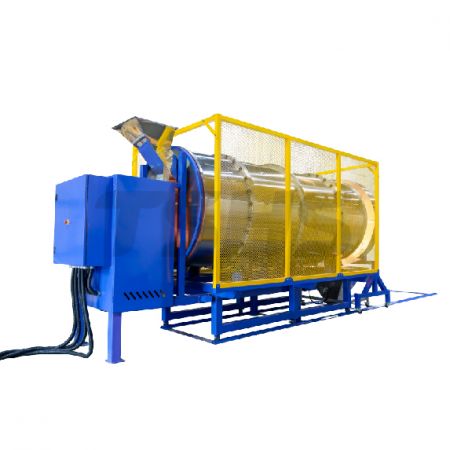
Infrared Drum Dryer Equipment
Infrared dryer drums use radiation to transfer heat to the targeted object, eliminating the energy...
Details- Videos
FRYIN-201 Small-size Continuous Fryer
Enter the continuous production market at an affordable price. The "small volume, space-saving" FRYIN-201 fryer. Suitable for small food industry, central kitchens, restaurants, food stores, schools, etc.
 Download
 Hot Products

Over 50 Years of Airbag Fabric Drying and Recycling Application (Japan) Supply | TSHS
Based in Taiwan, since 1965, TSUNG HSING FOOD MACHINERY CO., LTD. is a Airbag Fabric Drying and Recycling Application (Japan) supplier in snack foods industry.
500 food processing production lines sold in 65 countries, TSHS is a food machine expert with over 60 years of experiences. CE certified, reasonably priced food processing machinery are industrial fryers, oil heating systems, seasoning tumblers, liquid mixer machines, liquid sprayer machines, etc.
TSHS has been offering customers high-quality food processing machines for green peas, nuts, potato chips, grain puffs and corn puffs, with total snack foods solutions. They represent trust, specialty, high-quality and safety specialization, which is where their name TSHS came from.