
Fried Tofu Machine And Equipment Supplier | Processing Machinery & Turnkey Project Supply | TSHS
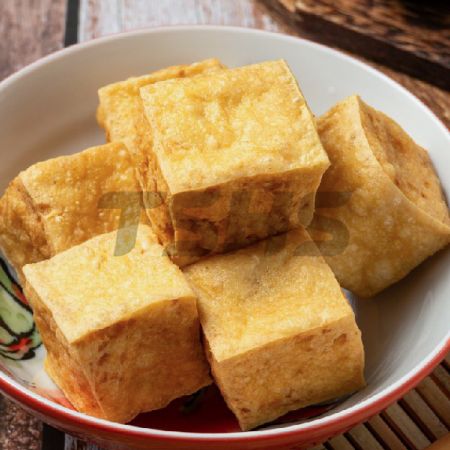
Fried tofu is one of the world's most popular soybean-based foods and is widely consumed in Asian cuisine, ready-to-eat meals, frozen foods, and the growing plant-based protein market. While Fried Tofu, Deep-fried Tofu, and Crispy Tofu are the most widely recognized international names, regional markets use their own local terms. In China, it is commonly known as You Tofu (Oil Tofu) or Doufupao; in Japan, Atsuage and Agedashi Tofu; in Indonesia, Tahu Goreng; in Malaysia and Singapore, Tauhu Goreng; in Thailand, Tao Hu Tod; in Vietnam, Đậu Hũ Chiên; and in the Philippines, Tokwa. As consumer demand for vegetarian, vegan, and convenience foods continues to grow worldwide, fried tofu has become an important product category across Southeast Asia, Japan, China, North America, and Europe, serving both traditional foodservice and modern plant-based food manufacturing markets. A Fried Tofu Machine And Equipment Supplier | food processing machinery manufacturer since 1965. CE certified food processing machinery including deep fryers, oil heating systems, seasoning tumblers, food liquid mixer machines, food liquid sprayer machines in snack foods industry. Food machine product list including: Continuous Automatic Frying Machine, Continuous Frying Machine Oil Heating System, Potato Chips Production Line, Grain Puff Production Line, Kurkure Production Line, Green Pea Production Line, Inflate (Pellet) Production Line, Nuts Processing Machine, Noodle Snack Production Line, Continuous Dryer Machine Conveyor- Automatic Type. Continuous Hot Air Dryer Machine, Customized dryer machine system, Dryer systems Solution for Consultation, Seasoning system, De-oiling system, Frying system peripheral equipment With more than 60 years experience to provide more than 500 fried production line all over the world. TSUNG HSING can provide the whole plant planning, improve the process and increase production quality and quantity. We also provide regular machine examination. Tsung Hsing is worth your trust.
Fried Tofu Machine And Equipment Supplier
Tofu Fryer Machine
Fried Tofu Fryer Machine
Fried tofu is one of the world's most popular soybean-based foods and is widely consumed in Asian cuisine, ready-to-eat meals, frozen foods, and the growing plant-based protein market. While Fried Tofu, Deep-fried Tofu, and Crispy Tofu are the most widely recognized international names, regional markets use their own local terms. In China, it is commonly known as You Tofu (Oil Tofu) or Doufupao; in Japan, Atsuage and Agedashi Tofu; in Indonesia, Tahu Goreng; in Malaysia and Singapore, Tauhu Goreng; in Thailand, Tao Hu Tod; in Vietnam, Đậu Hũ Chiên; and in the Philippines, Tokwa. As consumer demand for vegetarian, vegan, and convenience foods continues to grow worldwide, fried tofu has become an important product category across Southeast Asia, Japan, China, North America, and Europe, serving both traditional foodservice and modern plant-based food manufacturing markets.
The fried tofu production process typically includes dewatering, tofu cutting, continuous frying, de-oiling, cooling, optional seasoning, and packaging. Because tofu has a naturally high moisture content and a delicate structure, product quality is highly influenced by moisture consistency, frying temperature stability, residence time, and frying oil condition. Poor process control can result in insufficient crispness, excessive oil absorption, uneven expansion, inconsistent color, and increased product breakage. In addition, soybean solids and protein residues released during frying can rapidly accelerate oil degradation if not continuously removed, leading to more frequent oil replacement and equipment cleaning. For this reason, food manufacturers increasingly focus on integrated process design, efficient heat transfer, and continuous oil filtration to maintain consistent product quality, optimize oil management, and improve overall production efficiency.
Common Manufacturing Challenges in Tofu Production
1. High Moisture Content Causes Oil Splatter and Inconsistent Frying: Fresh tofu typically contains 75–90% moisture. If dewatering is insufficient or moisture content varies between batches, excessive oil splashing, unstable frying conditions, uneven crust formation, and inconsistent product texture may occur. Controlling moisture before frying is one of the most critical factors in producing high-quality Fried Tofu, Tahu Goreng, Tauhu Goreng, and Atsuage.
2. Oil Temperature Instability Affects Product Appearance and Texture: Tofu protein coagulates rapidly during frying. Temperature fluctuations may result in pale color, excessive browning, cracked surfaces, collapsed structure, or inconsistent crispness. Stable heat transfer and precise residence time are essential for maintaining product consistency.
3. High Oil Absorption Reduces Product Quality and Shelf: Improper frying conditions or insufficient de-oiling increase oil absorption, resulting in greasy texture, reduced shelf life, higher production costs, and lower consumer acceptance. This issue is especially critical for frozen fried tofu and ready-to-eat tofu products.
4. Soy Protein Residue Accelerates Oil Degradation: Unlike starch-based snacks, tofu continuously releases soy protein particles during frying. Without continuous filtration, these residues carbonize quickly, darken frying oil, increase free fatty acids, shorten oil life, and negatively affect product flavor and appearance.
5. Manual Handling Limits Production Capacity: Many manufacturers still rely on manual loading, unloading, and transfer processes. Soft tofu is easily damaged during handling, resulting in inconsistent throughput, labor dependency, and higher product breakage rates.
6. Frequent Cleaning Reduces Production Efficiency: Soy protein residue accumulates on conveyors, frying belts, oil tanks, and filtration systems. Equipment without hygienic design requires longer cleaning time, reducing daily production uptime and increasing maintenance costs.
Fried Tofu Solution
Producing high-quality Fried Tofu requires much more than simply frying tofu. Stable production depends on how each processing stage is integrated—from tofu preparation and moisture control to continuous frying, oil filtration, de-oiling, cooling, seasoning (when required), and final packaging. Every stage directly influences product appearance, oil absorption, texture, yield, and production efficiency. Tsung Hsing (TSHS) takes a food process engineering approach rather than simply supplying standalone equipment. Based on product characteristics, target production capacity, tofu density, desired texture, and regional market preferences, TSHS helps manufacturers develop suitable fried tofu production processes and equipment configurations. Whether producing Tahu Goreng for Southeast Asia, Atsuage for Japan, Fried Bean Curd for North America, or Golden Fried Tofu for retail markets, the production line can be optimized to balance product quality, frying oil management, equipment efficiency, and overall operating costs.
Recommended Equipment for Fried Tofu Production
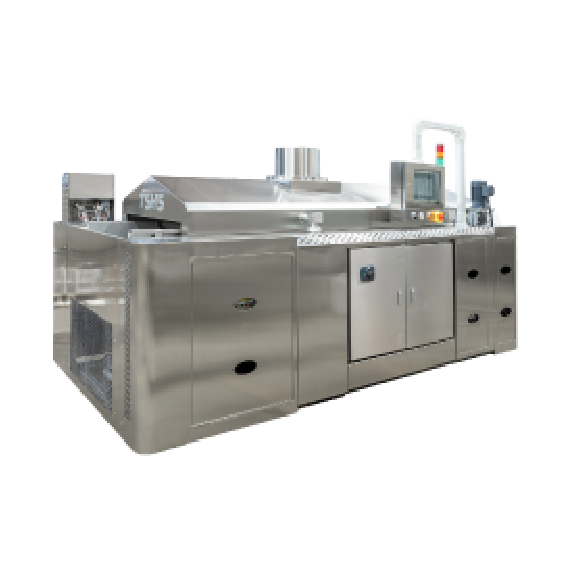
1. FRYIN-K Continuous Frying Machine
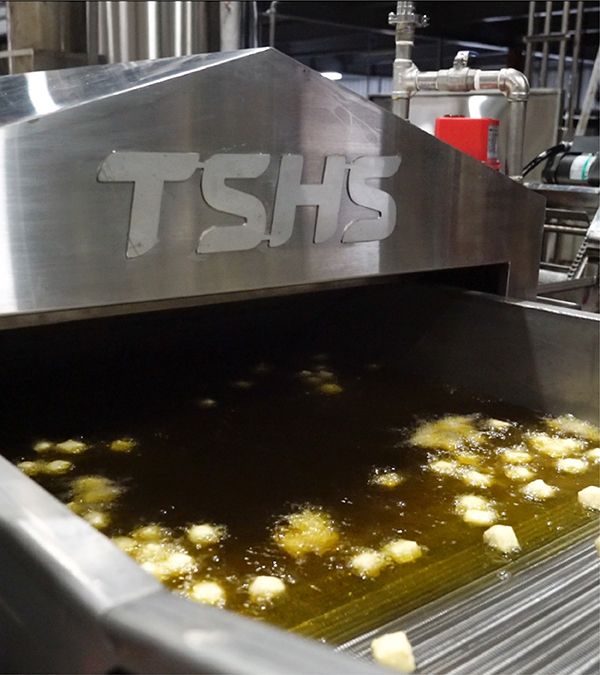
The FRYIN-K Continuous Fryer is the core cooking system for fried tofu production. It continuously transports tofu through a precisely controlled frying environment, maintaining stable oil temperature, uniform heat distribution, and accurate frying time. Compared with batch frying, continuous frying improves product consistency, reduces operator influence, and supports higher production capacity.
For products such as Fried Tofu, Deep-fried Tofu, Tahu Goreng, Tauhu Goreng, Atsuage, and Fried Bean Curd, the fryer helps achieve a golden appearance, crispy surface, and consistent internal texture while minimizing excessive oil absorption.
2. Continuous Oil Filtration System
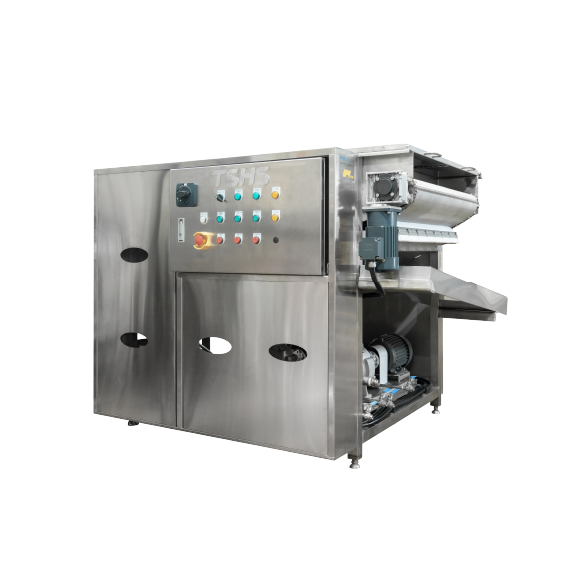
Soy protein residue generated during tofu frying quickly accelerates oil deterioration. The Continuous Oil Filtration System continuously removes suspended particles, soy protein debris, and carbonized residue during production, maintaining cleaner frying oil and extending oil service life.
Continuous filtration also improves product color consistency, reduces burnt flavor, minimizes cleaning frequency, and lowers overall frying oil consumption, making it an essential component for commercial fried tofu production.
3. Cooling Conveyor
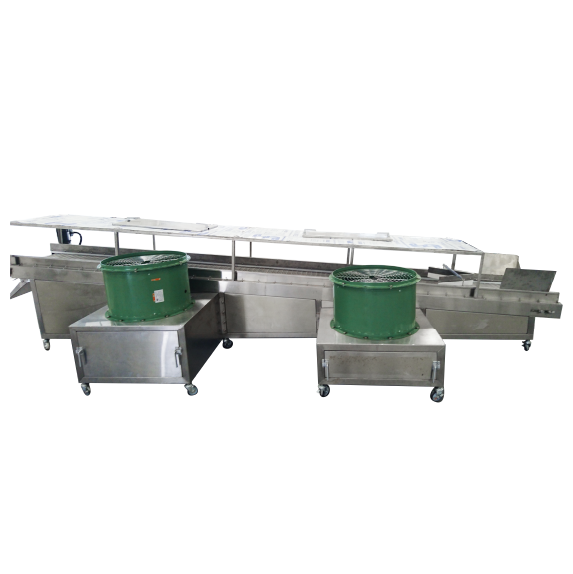
Proper cooling stabilizes fried tofu before packaging or seasoning. A Cooling Conveyor gradually reduces product temperature while preventing moisture condensation, helping maintain crust crispness and product integrity.
The cooling stage also improves downstream packaging efficiency and supports frozen or chilled tofu production lines.
Why choose the Tofu frying line equipment manufactured by TSHS
Food manufacturers choose Tsung Hsing (TSHS) not only for frying equipment, but also for its ability to design complete processing solutions based on product characteristics, production capacity, and target market requirements. With decades of experience serving global food manufacturers, TSHS supports production lines for fried snacks, plant-based protein foods, soybean products, meat products, seafood, and ready-to-eat foods across Asia, Europe, the Middle East, and the Americas.
1. Global Export Experience: TSHS has supplied food processing equipment to customers in more than 70 countries, supporting manufacturers producing Fried Tofu, Tahu Goreng, Tauhu Goreng, Atsuage, frozen soybean products, and various fried plant-based foods. Different regional markets have unique requirements for texture, color, oil absorption, and production capacity, and TSHS assists customers in configuring suitable processing solutions accordingly.
2. Production Line Customization: Every fried tofu product has different production requirements depending on tofu density, moisture content, product dimensions, desired crispness, and packaging method. TSHS evaluates these production variables to recommend suitable fryer length, conveyor design, filtration capacity, cooling configuration, and automation level.
3. Integrated Processing Solutions: Instead of supplying standalone equipment, TSHS focuses on integrating upstream and downstream processing stages into one continuous production flow. Proper sequencing improves frying stability, minimizes product handling damage, reduces labor requirements, and increases overall production efficiency.
4. Pilot Testing and Process Validation: To reduce investment risks, TSHS provides product testing services that allow manufacturers to evaluate frying performance, oil absorption, product texture, color development, and equipment compatibility before final production planning.
FAQ Summary Of Tofu
Q:What equipment is required for Fried Tofu production?
A: A typical Fried Tofu production line includes a tofu cutting system, dewatering process, Continuous Fryer, Oil Filtration System, De-oiling Conveyor, Cooling Conveyor, optional Seasoning Machine, and packaging equipment. The configuration can be customized according to production capacity, product specifications, and target market requirements.
Q:How can manufacturers improve Fried Tofu production efficiency?
A: Improving moisture consistency before frying, adopting a continuous frying system, integrating oil filtration, optimizing cooling, and reducing manual handling can significantly improve product consistency, reduce oil consumption, lower labor costs, and increase production capacity.
Q: Which frying system is suitable for Fried Tofu production?
A: The FRYIN-K Continuous Fryer is suitable for producing Fried Tofu, Deep-fried Tofu, Tahu Goreng, Tauhu Goreng, Atsuage, Fried Bean Curd, and other soybean-based fried products. It provides stable oil temperature control, uniform heat transfer, continuous production, and consistent product quality.
Applications
 Fried Tofu|High-Moisture Food Frying
 Fried Tofu|Soy Protein Foods
 Atsuage|Tofu Processing
 Fried Tofu|Soy-Based Foods|Plant-Based Protein Foods
- Related Products
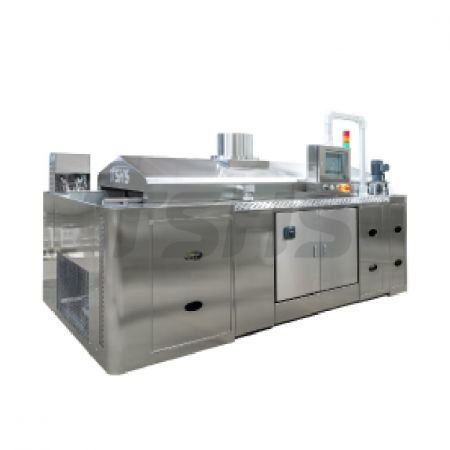
Continuous Inner-Furnace Fryer (FRYIN-K Series)
FRYIN-302K、FRYIN-402K
The FRYIN-K Series Continuous Fryer is engineered to comply with European CE safety regulations...
Details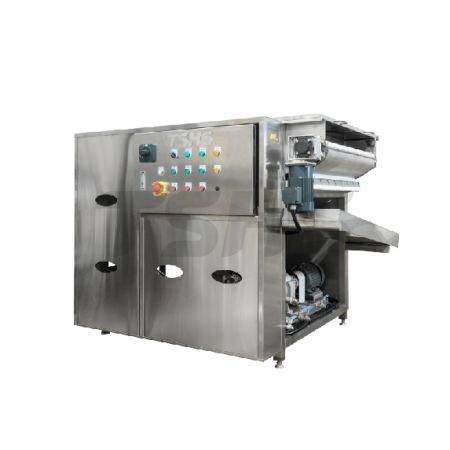
Continuous Fine Filter
TsungHsing Food Machinery is a Continuous Fine Filter machine manufacturer and supplier. TsungHsing...
Details- CASE STORY
- Videos
FRYIN-201 Small-size Continuous Fryer
Enter the continuous production market at an affordable price. The "small volume, space-saving" FRYIN-201 fryer. Suitable for small food industry, central kitchens, restaurants, food stores, schools, etc.
 Download
 Hot Products

Tags
- Fried Tofu Production Line
- Fried Tofu Processing Equipment
- Fried Tofu Frying Machine
- Continuous Fryer for Tofu
- Fried Bean Curd Production Line
- Deep-fried Tofu Processing Line
- Tahu Goreng Production Line
- Tauhu Goreng Processing Equipment
- Atsuage Production Equipment
- Plant-Based Protein Processing Equipment
- Continuous Frying System
- Industrial Tofu Fryer
Over 50 Years of Fried Tofu Machine And Equipment Supplier Supply | TSHS
Based in Taiwan, since 1965, TSUNG HSING FOOD MACHINERY CO., LTD. is a Fried Tofu Machine And Equipment Supplier supplier in snack foods industry.
500 food processing production lines sold in 65 countries, TSHS is a food machine expert with over 60 years of experiences. CE certified, reasonably priced food processing machinery are industrial fryers, oil heating systems, seasoning tumblers, liquid mixer machines, liquid sprayer machines, etc.
TSHS has been offering customers high-quality food processing machines for green peas, nuts, potato chips, grain puffs and corn puffs, with total snack foods solutions. They represent trust, specialty, high-quality and safety specialization, which is where their name TSHS came from.