
What Is Food Drying? A Guide to Food Drying Principles, Methods, and Equipment Selection | TSHS News and Events | TSUNG HSING FOOD MACHINERY CO., LTD.
TSHS What Is Food Drying? A Guide to Food Drying Principles, Methods, and Equipment Selection. TSHS is a professional food machine manufacturer. We have exclusive patented heating system. Provided more than 500 frying production around the world. Also offer customized microwave industrial dryer.. We are a professional frying machine manufacturer. And provide customized continuous automatic drying equipment services. Our customer includes the top 10 snack food companies in various countries, central kitchen, other fried food manufacturers, Food Industry/Biotechnology Industry/Chemical Industry/Rubber Industry/Textile Industry. that have a need for the drying system. We have 60 years of professional food equipment manufacturing experience, specialized in food frying production equipment, customized continuous drying systems, extruder equipment, seasoning systems, de-oiling equipment. We provide global installation services, entire factory planning consultation, production knowledge guidance, improve the process problems, and provide after-services of maintaining inspection for equipment. TSHS equipment is always your best choice.
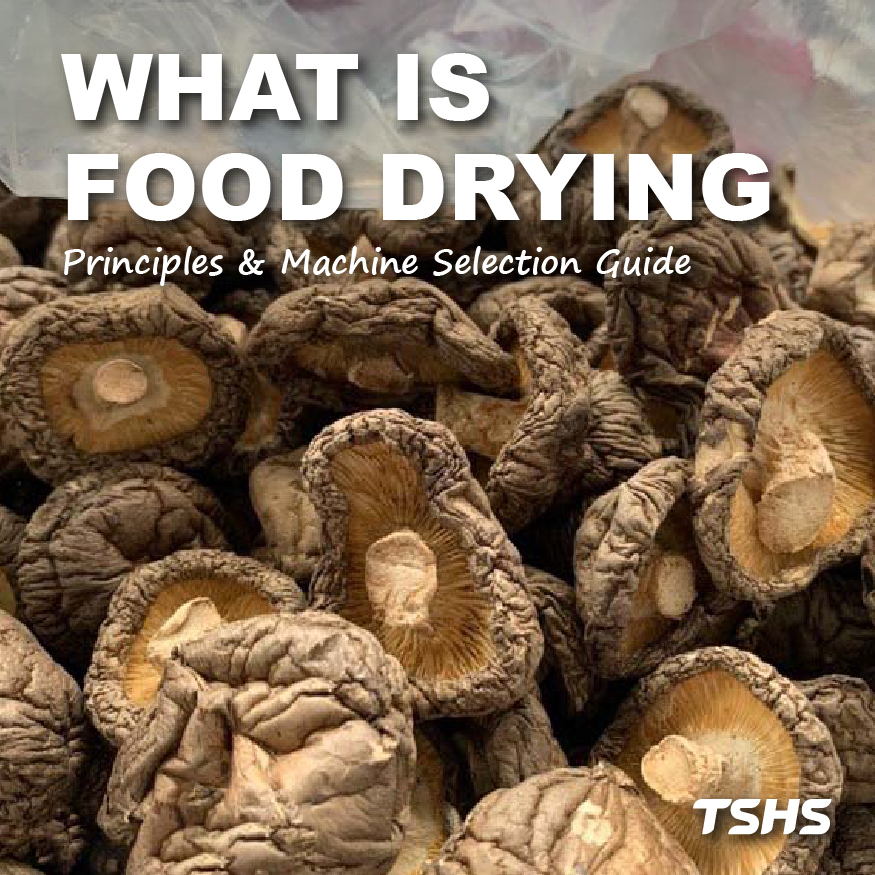
What Is Food Drying? A Guide to Food Drying Principles, Methods, and Equipment Selection
Food drying is a common preservation and processing technique in the food industry. It works by removing part of the moisture from food and reducing water activity, which helps inhibit microbial growth and improve product storage stability. From traditional sun drying and air drying to modern industrial technologies such as hot air drying, infrared drying, microwave drying, vacuum drying, and freeze drying, each food drying method has its own processing characteristics and applications.
However, food drying is not simply about removing as much moisture as possible. Different raw materials vary in moisture content, size, structure, heat sensitivity, and desired texture, which means the appropriate drying temperature, drying time, and food drying equipment can also differ. For food manufacturers, the key is not to dry products as quickly or as thoroughly as possible, but to identify the drying method and process conditions best suited to the product.
Food Drying at a Glance
Here are four key points to quickly understand the food drying process:
● Why is food dried?
Food drying reduces the amount of available water in food, helping inhibit microbial growth and improve storage stability.
● Is drier always better?
No. Insufficient drying may affect storage stability, while excessive drying can negatively affect texture, color, and flavor, while also increasing unnecessary energy consumption.
● What are the main food drying methods?
Food drying methods can generally be divided into natural drying and artificial drying. Artificial drying includes technologies such as hot air drying, infrared drying, microwave drying, vacuum drying, and freeze drying.
● How should food manufacturers choose food drying equipment?
Selecting the right food drying equipment requires evaluating factors such as raw material characteristics, initial moisture content, product size, target moisture content, production capacity, heat sensitivity, and desired final product quality.
Why Does Food Need to Be Dried? The Key Is Water Activity
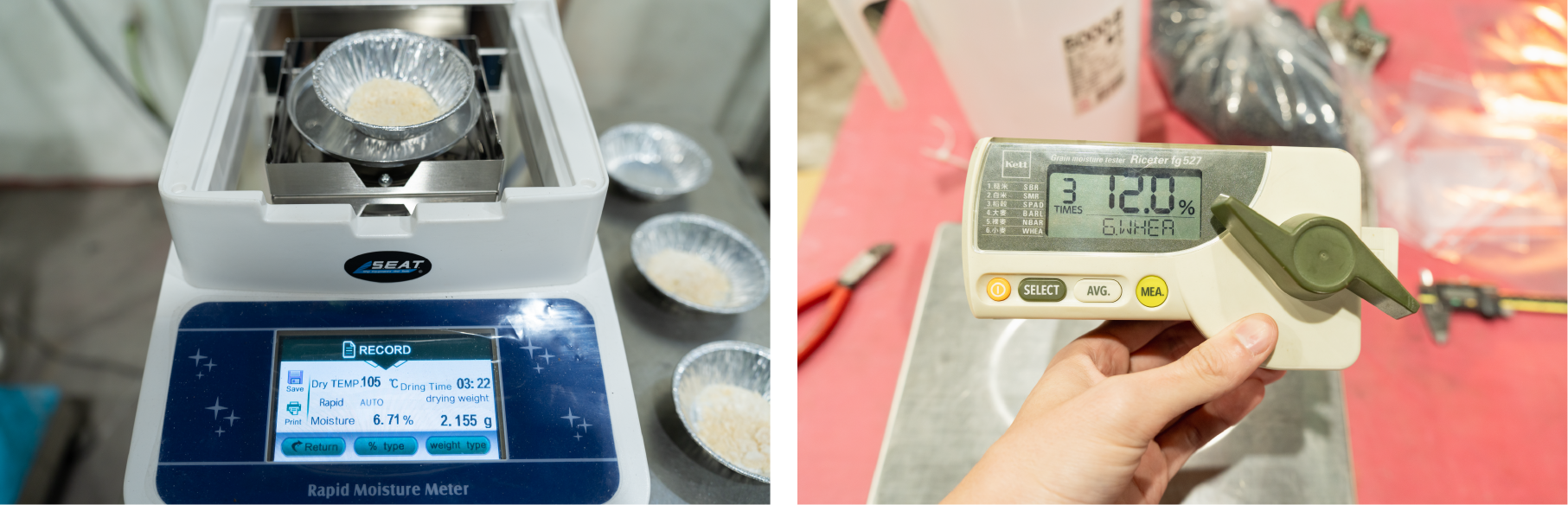
Food drying helps improve storage stability not simply because it “removes moisture,” but more importantly because it reduces the amount of water available for microbial growth.
Water in food can be understood from two key perspectives:
● Moisture Content: The actual amount of water present in the food.
● Water Activity (aw): A measure of how much water in the food is available to support microbial growth.
During the food drying process, water activity decreases, creating conditions that inhibit the growth of bacteria, yeasts, and molds and helping slow food spoilage. However, drying primarily creates an environment that is less favorable for microbial growth; it does not necessarily eliminate all microorganisms. Therefore, food safety still depends on appropriate processing, packaging, and storage practices in addition to proper drying.
What Are the Benefits of Food Drying?
Food drying was originally used as a method of food preservation, but in modern food processing, its benefits extend far beyond simply extending shelf life. Drying can also influence product form, transportation efficiency, texture, flavor, and overall product value.
1. Improve Food Storage Stability
Reducing the amount of available water in food helps inhibit the growth of many microorganisms and can slow certain quality deterioration reactions, helping maintain product stability during storage.
2. Reduce Product Weight and Volume
Water often accounts for a significant portion of a food product's weight. Removing part of this moisture can reduce product weight and, for some products, decrease volume as well. This can improve efficiency in packaging, storage, and transportation.
3. Improve Convenience and Ease of Use
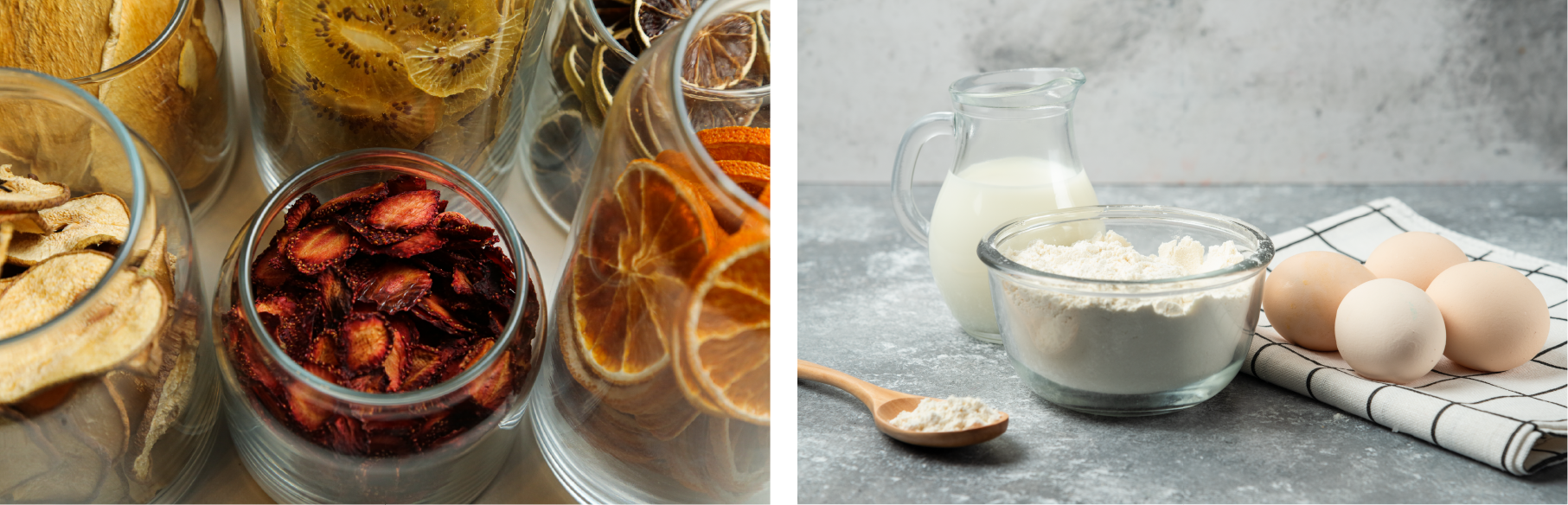
Food drying can transform products into forms that are easier to store, transport, prepare, or consume. Milk powder, dried vegetables, instant foods, and various rehydratable products are examples of how different food drying technologies can improve product convenience.
4. Create Different Textures and Flavors
An appropriate food drying process can change the structure and texture of food, creating characteristics that differ from those of the original raw material. Products such as jerky, dried fruit, and dried fish often combine drying with seasoning or other processing steps to develop distinctive textures, aromas, and flavors.
5. Create New Product Forms and Add Value
Food drying technology can also support the reuse of food processing by-products. High-moisture by-products such as okara (soy pulp) and coffee grounds can be properly dried and further developed into value-added products for different applications.
Is Drier Always Better? How Drying Levels Affect Food Quality
When it comes to food drying, lower moisture content does not always mean better quality. Insufficient drying may leave too much moisture in the product and affect storage stability, while excessive drying can also reduce overall product quality. For example, if the drying temperature is too high or the drying time is too long, fruits, vegetables, and meat products may become overly hard, brittle, or shrink, affecting their original texture and appearance. Prolonged exposure to heat may also cause aroma loss, color changes, and the degradation of certain nutrients.
From a food manufacturing perspective, once a product has reached its target drying level, extending the drying process may simply increase equipment operating time and energy consumption without improving product quality. Therefore, an effective food drying process should achieve the right balance between storage stability, product quality, drying efficiency, and energy consumption.
Different Foods Require Different Drying Conditions
There is no single set of food drying parameters that can be applied to every product. For example, when drying fruit, manufacturers typically consider not only moisture reduction but also texture, color, and flavor. Jerky requires attention to texture, storage stability, and potential oxidation in products containing fat. Biscuits, crackers, and chips generally place greater emphasis on crispness after drying and the risk of moisture reabsorption.
For powdered products or plant-based proteins, moisture content is not the only consideration. Manufacturers may also need to evaluate whether the dried product is prone to moisture absorption or caking. For dried vegetables, factors such as color, appearance, structure, and rehydration properties may also need to be evaluated depending on the intended application.
Therefore, a food drying process should not rely solely on a fixed drying temperature and drying time. Drying conditions need to be adjusted according to the characteristics of the product and the desired final quality. Before moving into full-scale production, testing the actual material to verify drying performance is often an important step in establishing suitable process parameters.
Practical Drying Case Study: Pellets for Expanded Snack Foods
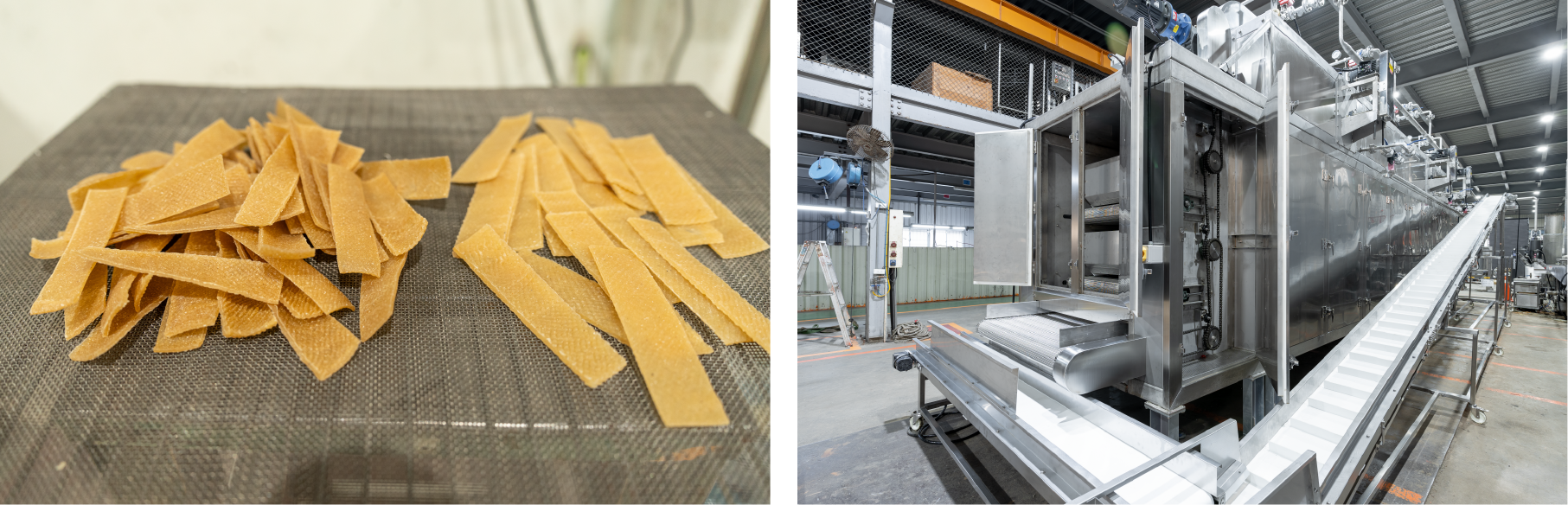
Pellets used for expanded snack products need to be dried to a suitable moisture level before entering the subsequent expansion process. Because pellet size, thickness, formulation, and initial moisture content can vary, the required drying conditions may also differ. For this reason, moisture control and drying uniformity are key considerations in the pellet drying process.
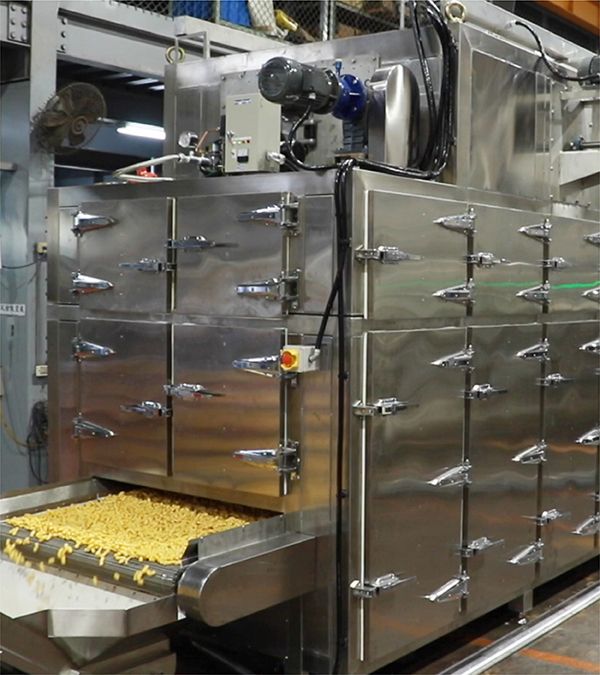
In one practical case-study project by TSHS, a multi-layer hot air dryer was introduced based on the customer's pellet characteristics and target moisture requirements. The system used a recirculating drying design, allowing the material to circulate continuously through the dryer while moisture was gradually removed until the desired drying condition was achieved.
Actual production results showed that the pellet moisture content was reduced from approximately 32% to 13%. According to customer feedback, the drying cycle was also shortened by around 2 to 3 hours compared with the previous equipment. Through actual material testing and process parameter adjustments, the system not only achieved the customer's target moisture level, but also improved the drying process for higher-volume production and future capacity expansion.
What Are the Main Food Drying Methods? Natural Drying vs. Artificial Drying
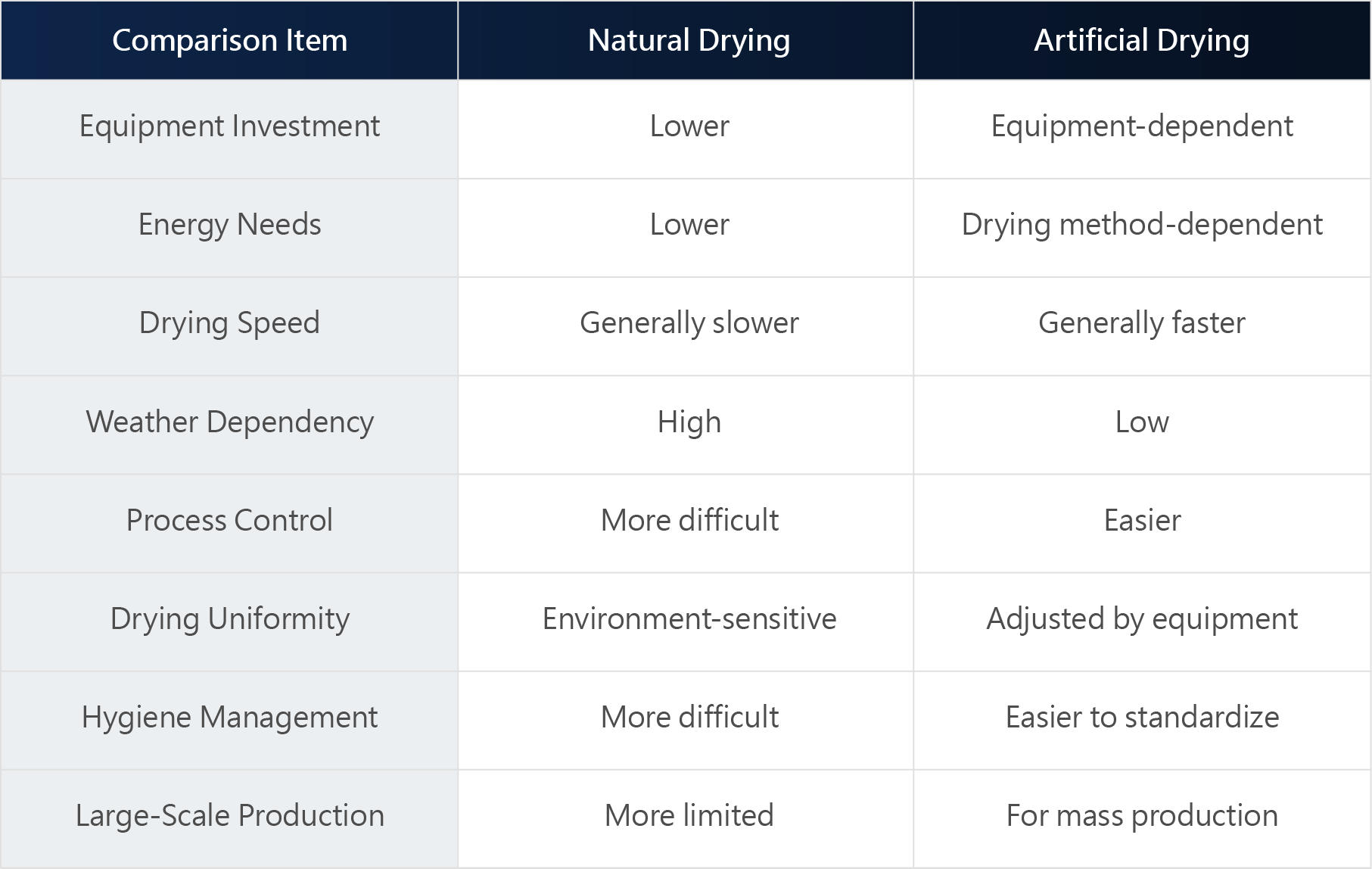
Traditional food processing has long relied on natural environmental conditions for drying. As food production has evolved toward large-scale, continuous, and standardized processing, artificial drying equipment that allows better control over process parameters has become a common choice for modern food manufacturers.
Natural Drying: Using Sunlight and Environmental Conditions to Remove Moisture
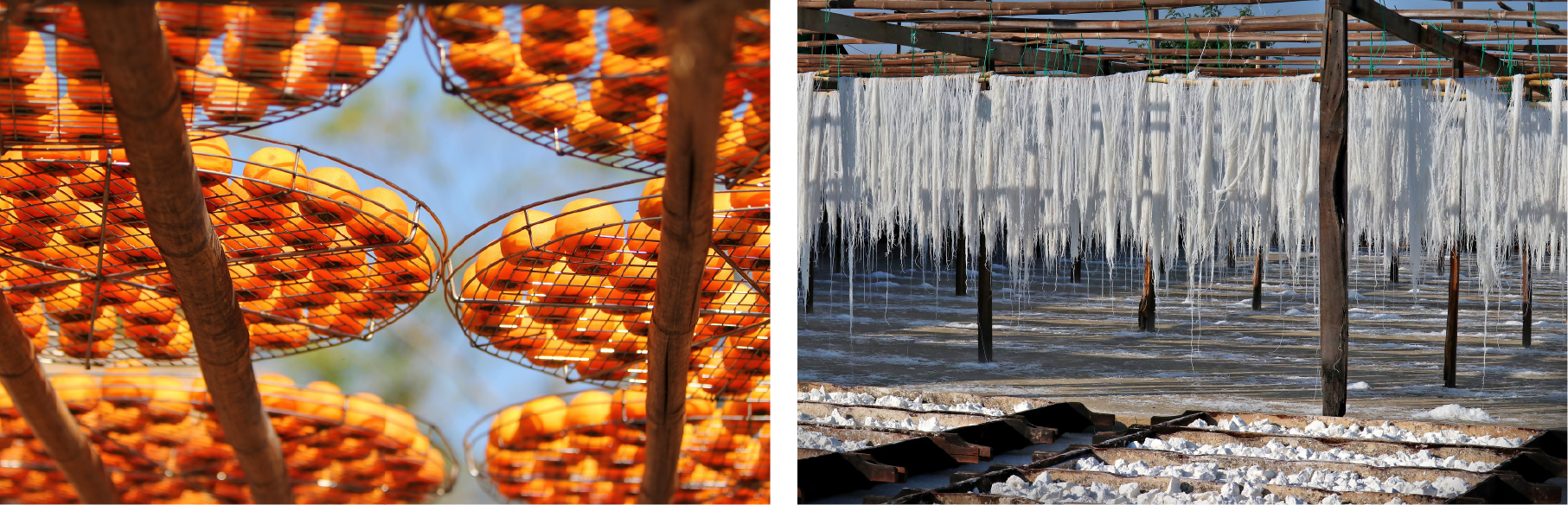
Natural drying is one of the oldest methods of food preservation. It mainly uses sunlight, natural airflow, temperature, and humidity to remove moisture from food. Common methods include sun drying, air drying, and shade drying. Typical applications include dried persimmons, raisins, dried mushrooms, dried radish, dried fish, and various traditional dried foods.
Because natural drying relies primarily on environmental conditions, it generally requires simpler equipment and less external energy. For certain traditional foods, sun drying or air drying can also contribute to distinctive product characteristics. However, the main limitation of natural drying is the difficulty of controlling the drying process. Drying rates can be affected by ambient temperature, humidity, sunlight, and wind speed, often resulting in longer drying times and greater variation in moisture levels and product quality between batches. Since drying takes place in an open environment, manufacturers must also pay particular attention to hygiene risks such as dust, insects, and microbial contamination.
Artificial Drying: Controlling Drying Conditions with Food Drying Equipment
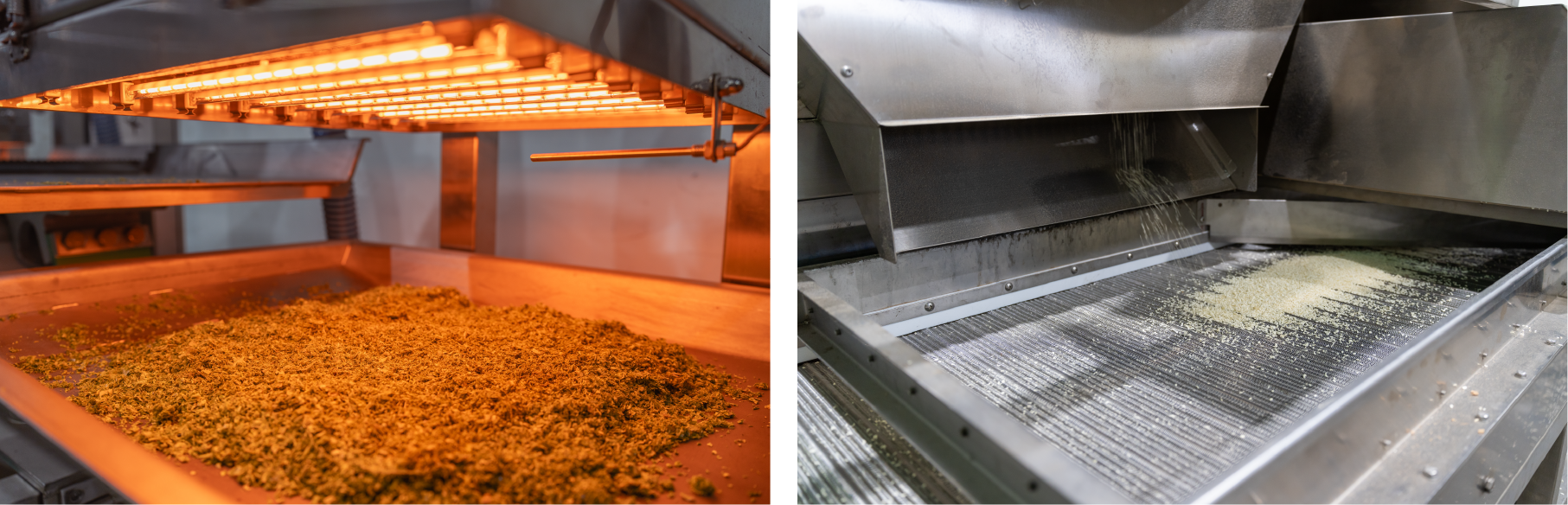
Compared with natural drying, which is highly affected by weather and environmental conditions, artificial drying uses controlled equipment to regulate factors such as temperature, airflow, humidity, and drying time, gradually removing moisture from food products. Because these process parameters can be adjusted according to specific product requirements, artificial drying makes it easier to maintain consistent drying quality. It is therefore well suited for food manufacturers that require stable production, large-scale processing, or continuous drying operations.
As food processing technology has advanced, various artificial drying methods have been developed, including hot air drying, infrared drying, microwave drying, vacuum drying, and freeze drying. Each technology has different characteristics in terms of heating principle, drying efficiency, product quality, and equipment cost. For example, freeze drying generally provides better shape retention and rehydration properties, but requires higher equipment investment and operating costs. Hot air drying, on the other hand, is widely used in the food processing industry due to its mature technology and broad range of applications. Even when based on the same drying principle, different types of food drying equipment can be developed to suit specific material characteristics and processing requirements. Examples include multi-layer hot air dryers, and IRD infrared rotary drum dryers, cyclone hot air dryers.
What Is the Difference Between Natural Drying and Artificial Drying?
How Should Food Manufacturers Choose the Right Food Drying Equipment?
There are many types of food drying equipment available. Even when the same hot air drying principle is used, different dryer designs may be required depending on how the material moves through the system, airflow design, and product characteristics. Therefore, food manufacturers should evaluate at least the following factors when selecting food drying equipment:
1. Raw Material Characteristics
Evaluate the initial moisture content, size, shape, viscosity, density, particle size, and heat sensitivity of the raw material.
2. Final Product Requirements
In addition to the target moisture content, consider quality requirements such as color, appearance, texture, crispness, flowability, and rehydration properties.
3. Production Capacity
Determine the required processing capacity per hour and whether batch drying or continuous drying is more suitable for the production process.
4. Drying Uniformity
Differences in product thickness, density, or airflow distribution can lead to uneven drying. It is therefore important to evaluate whether the drying equipment can provide sufficient heat transfer and effectively remove moisture throughout the product.
5. Drying Efficiency and Energy Consumption
Faster drying does not necessarily mean higher efficiency. The time and energy required to achieve the same target moisture content and product quality should be evaluated together when comparing industrial food drying equipment.
6. Upstream and Downstream Processes
Consider whether the product requires additional processing before or after drying, such as dewatering, cooling, seasoning, grinding, conveying, or packaging, as these steps can affect the overall production line design.
7. Cleaning and Hygiene Requirements
Food processing equipment should also be evaluated based on equipment materials, structural design, cleaning methods, and ease of routine maintenance.
Find the Right Drying Solution Through Actual Material Testing
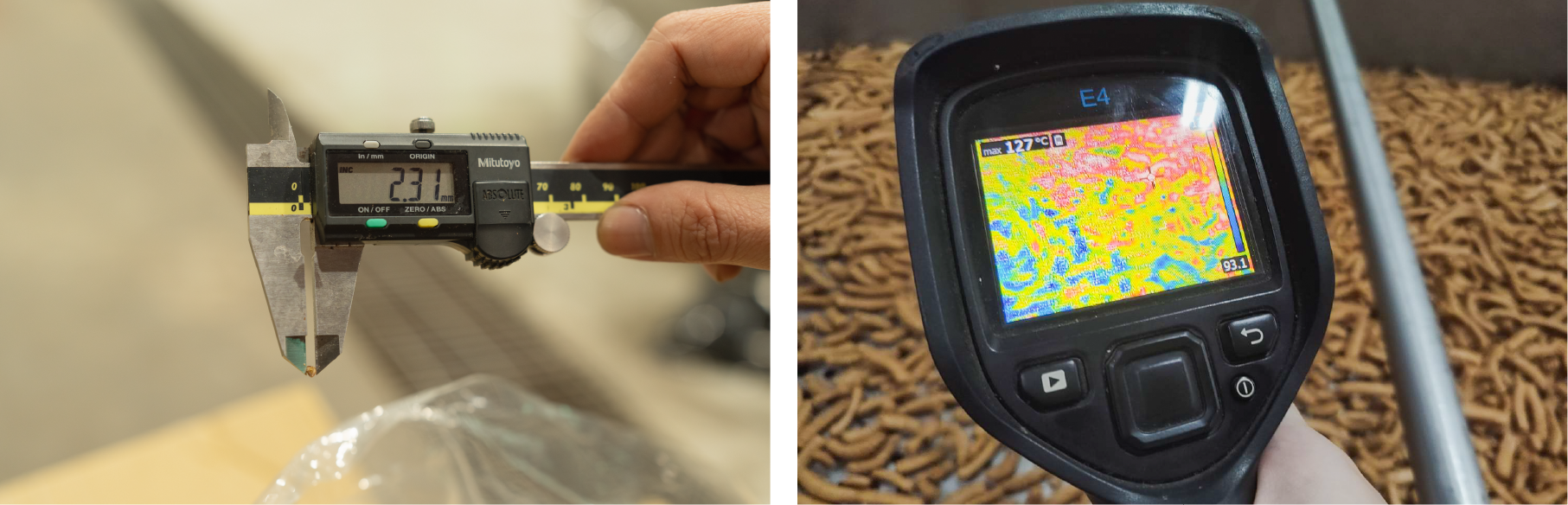
Different raw materials have different drying characteristics, which means the appropriate equipment and process parameters often need to be verified through actual material testing. TSHS can conduct drying trials based on your product characteristics and production requirements, using the test results to evaluate suitable food drying equipment and process parameters for future industrial production.
Our food drying equipment includes multi-layer hot air dryers, IRD infrared rotary drum dryers, and cyclone hot air dryers. The appropriate drying solution can be evaluated based on factors such as material type, initial moisture content, target moisture content, production capacity, and final product requirements.
Looking for the right food drying equipment for your production line? Contact TSHS and share your raw material, required capacity, and drying requirements. Through actual material testing, we can help you identify a drying solution better suited for stable, large-scale production.
Hot Products
FRYIN-201 Small-size Continuous Fryer
Enter the continuous production market at an affordable price. The "small volume, space-saving" FRYIN-201 fryer. Suitable for small food industry, central kitchens, restaurants, food stores, schools, etc.
 Download
 Over 50 Years of Deep Fryer Machine | Snack Food Processing Equipment & Turnkey Project Supply | TSHS
Based in Taiwan, since 1965, TSUNG HSING FOOD MACHINERY CO., LTD. is a food processing equipment supplier in snack foods industry.
500 food processing production lines sold in 65 countries, TSHS is a food machine expert with over 60 years of experiences. CE certified, reasonably priced food processing machinery are industrial fryers, oil heating systems, seasoning tumblers, liquid mixer machines, liquid sprayer machines, etc.
TSHS has been offering customers high-quality food processing machines for green peas, nuts, potato chips, grain puffs and corn puffs, with total snack foods solutions. They represent trust, specialty, high-quality and safety specialization, which is where their name TSHS came from.