
What Is Food-Grade Stainless Steel? Differences Between 304, 316, and 430 — A Complete Guide to Materials and Applications | TSHS News and Events | TSUNG HSING FOOD MACHINERY CO., LTD.
TSHS What Is Food-Grade Stainless Steel? Differences Between 304, 316, and 430 — A Complete Guide to Materials and Applications. TSHS is a professional food machine manufacturer. We have exclusive patented heating system. Provided more than 500 frying production around the world. Also offer customized microwave industrial dryer.. We are a professional frying machine manufacturer. And provide customized continuous automatic drying equipment services. Our customer includes the top 10 snack food companies in various countries, central kitchen, other fried food manufacturers, Food Industry/Biotechnology Industry/Chemical Industry/Rubber Industry/Textile Industry. that have a need for the drying system. We have 60 years of professional food equipment manufacturing experience, specialized in food frying production equipment, customized continuous drying systems, extruder equipment, seasoning systems, de-oiling equipment. We provide global installation services, entire factory planning consultation, production knowledge guidance, improve the process problems, and provide after-services of maintaining inspection for equipment. TSHS equipment is always your best choice.
What Is Food-Grade Stainless Steel? Differences Between 304, 316, and 430 — A Complete Guide to Materials and Applications
As awareness of food safety continues to rise, choosing the right material for equipment has become a key factor in ensuring hygiene and product quality. Food-grade stainless steel, known for its high safety, chemical stability, and long-term durability, is widely used in food processing equipment, food machinery, kitchenware, and even medical fields. It is the most common metal material in the food-safety industry.
This article will help you understand the types, characteristics, and key points for selecting food-grade stainless steel.
What Is Stainless Steel? Understanding Its Core Elements and Structure
“Stainless steel,” commonly known as white iron in everyday language, is an alloy steel composed of various metallic elements. Its main components include carbon (C), iron (Fe), chromium (Cr), nickel (Ni), manganese (Mn), and molybdenum (Mo). Among these, the most critical element is chromium (Cr). Chromium forms a thin, protective chromium oxide film on the surface of the steel, preventing oxygen from coming into contact with iron and thus providing rust resistance. Only when the chromium content reaches 10.5% or higher can the material be classified as true stainless steel.
Depending on the proportions of the metallic components and their performance characteristics, stainless steel is divided into multiple series, each suited for different applications. Below are the key elements and their functions:
📌Chromium (Cr): Reacts with oxygen to create a dense chromium oxide layer—essential for rust resistance.
📌Nickel (Ni): Enhances oxidation and corrosion resistance, especially effective in acidic environments.
📌 Molybdenum (Mo): Improves resistance to chloride-rich environments and helps quickly repair the protective surface layer.
📌 Manganese (Mn): Can partially replace nickel to reduce costs, but offers relatively weaker corrosion resistance.

Why Is Food-Grade Stainless Steel So Important? It Directly Affects Food Safety
The importance of food-grade stainless steel comes from its close connection to food safety and human health. It effectively prevents chemical reactions between food and metal, ensuring that no harmful substances are released and avoiding heavy-metal contamination. In addition, its smooth, non-porous surface makes it difficult for dirt or bacteria to accumulate. Unlike iron or copper, it does not oxidize or discolor, greatly reducing the risk of contamination during food processing and frying operations.
To ensure safety and quality, food-grade stainless steel must meet international certifications and composition standards. Common regulations include:
l • FDA (U.S. Food and Drug Administration)
l •NSF (National Science Foundation / NSF International)
l •SGS (International third-party testing organization)
As a general principle, the chromium (Cr) content must reach at least 16% to form a stable protective film. This is often combined with appropriate amounts of nickel (Ni) and molybdenum (Mo) to enhance durability and stability in acidic, alkaline, or chloride-rich environments.
✅ Key Reminder
Different international standards vary slightly in their required composition ratios. In general, 10.5% chromium is the minimum threshold for stainless steel, while 16% or more is recommended for food-contact applications.
Common Types of Food-Grade Stainless Steel and Their Differences
Food-grade stainless steel can generally be categorized into the 200, 300, and 400 series, based on composition and application. Each series differs in structural stability, workability, and cost. Below is an in-depth look at the characteristics and differences among the most common stainless-steel grades👇
200 Series – Industrial-Grade Stainless Steel
The 200 series was developed during World War II due to a shortage of nickel. In this series, the more affordable manganese (Mn) is used to partially replace nickel (Ni), lowering production costs. However, its corrosion resistance is relatively poor and it rusts more easily. It is considered industrial-grade stainless steel and is commonly used for window frames, doors, and industrial components.
300 Series (304, 316) – Mainstream Food-Grade Stainless Steel
The 300 series is the most widely used and stable class of stainless steel. • 304 stainless steel contains about 18% chromium (Cr) and 8% nickel (Ni). It offers reliable corrosion resistance and good formability. It is currently the most common food-grade material, widely used in tableware, food containers, medical equipment, and kitchen appliances. •316 stainless steel is a higher-grade corrosion-resistant stainless steel. Compared to 304, it contains about 2% molybdenum (Mo), which significantly enhances resistance to salt and chloride environments. Therefore, it is commonly used in marine environments and medical equipment. It is also known as “marine-grade” or “medical-grade” stainless steel. Although more expensive, it provides superior stability and safety.
400 Series (430) – Cost-Effective Food-Grade Stainless Steel
430 stainless steel is an iron-chromium alloy with almost no nickel content, which makes it magnetic. Its corrosion resistance is lower than 304 or 316, and it tends to lose shine and rust more easily. However, it is more affordable and is commonly used for kitchen appliance casings, dishwasher interiors, and washing machine panels, where the steel does not directly contact food.
If you prioritize food safety, durability, and hygiene standards, 304 or 316 are the recommended choices. Ultimately, stainless-steel selection should be based on application environment, budget, and corrosion-resistance requirements—choosing the right grade ensures durability and cost efficiency!

Advantages of Food-Grade Stainless Steel
Food-grade stainless steel has become the top choice for food-processing equipment and kitchenware not only because of its high safety and stability, but also due to its ability to maintain excellent performance under harsh conditions. From appearance to lifespan and sustainability, it offers advantages that other metals cannot match.
1. Strong and Durable — Long-Lasting Without Deformation: It has outstanding resistance to oxidation and chemical corrosion. Even with long-term exposure to acids, alkalis, or salts, it is not prone to rust or corrosion. Its solid structure also makes it resistant to cracking or warping, significantly extending equipment lifespan.
2. Attractive Shine — Enhances Professional Appearance: After polishing, its surface becomes bright and smooth, improving overall aesthetics and projecting a professional, high-quality image.
3. Easy Maintenance — Simpler Cleaning: Its smooth, non-porous surface makes it difficult for dirt or bacteria to accumulate, making cleaning and maintenance effortless.
4. Safe and Non-Toxic — Ensures Food Purity: It does not react chemically with food nor release harmful substances, effectively preventing heavy-metal contamination and ensuring both processing safety and food purity.
5. Excellent Heat Resistance: It can withstand cooking temperatures up to 1000°C and remains structurally stable even during high-pressure sterilization processes.
6. Environmentally Friendly and Sustainable: As a fully recyclable metal, stainless steel can be reprocessed and reused even after long-term use. This supports sustainability goals and reduces long-term operational costs.
7. Versatile Structure — Improved Heat Conductivity: It can be paired with aluminum or copper cores to enhance heat conduction. This results in more uniform heating, higher energy efficiency, and maintained structural stability of the equipment.

Food Safety Begins with the Right Materials
Food-grade stainless steel is not just a metal that “doesn’t rust”—it is an essential safeguard for maintaining food hygiene and protecting human health. Choosing certified materials (especially 304 or 316), along with proper use and maintenance, ensures that equipment remains stable and safe even after long-term operation. Remember: when selecting stainless steel, the composition matters more than the grade number. Only by choosing the right material can you protect every step of the production process and preserve the quality of every delicious product.
Tsung Hsing Food Machinery specializes in the development and manufacturing of various food-processing equipment, including frying machines, dryers, seasoning systems, and conveying equipment, offering complete production-line solutions. We insist on using 304/316 food-grade stainless steel to ensure that every machine delivers stability, durability, and hygienic safety. With years of experience, our equipment is widely used across the snack industry and food factories. From each processing step to every final product, we uphold strict standards—allowing you to produce with confidence and use with peace of mind. We are the reliable choice for food-processing and commercial kitchen equipment.
Hot Products
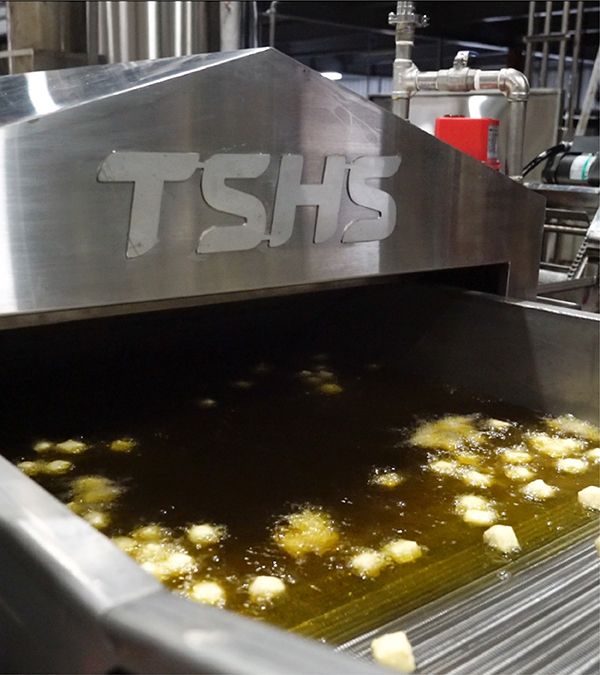
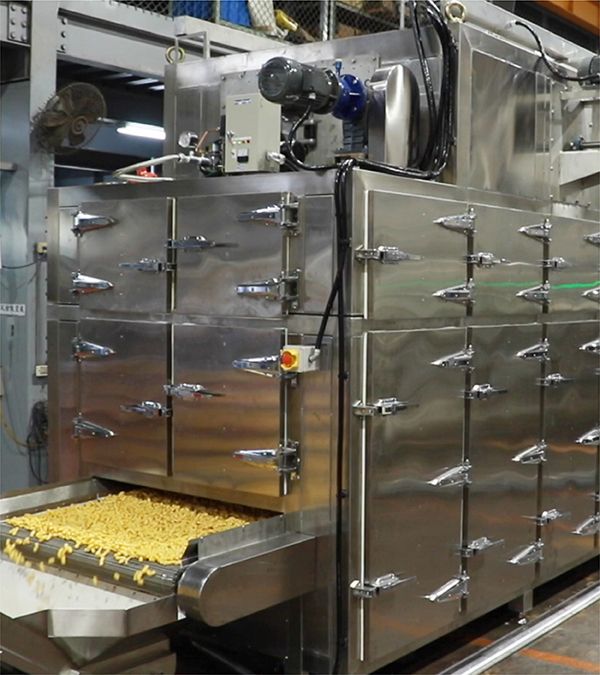
FRYIN-201 Small-size Continuous Fryer
Enter the continuous production market at an affordable price. The "small volume, space-saving" FRYIN-201 fryer. Suitable for small food industry, central kitchens, restaurants, food stores, schools, etc.
 Download
 Over 50 Years of Deep Fryer Machine | Snack Food Processing Equipment & Turnkey Project Supply | TSHS
Based in Taiwan, since 1965, TSUNG HSING FOOD MACHINERY CO., LTD. is a food processing equipment supplier in snack foods industry.
500 food processing production lines sold in 65 countries, TSHS is a food machine expert with over 60 years of experiences. CE certified, reasonably priced food processing machinery are industrial fryers, oil heating systems, seasoning tumblers, liquid mixer machines, liquid sprayer machines, etc.
TSHS has been offering customers high-quality food processing machines for green peas, nuts, potato chips, grain puffs and corn puffs, with total snack foods solutions. They represent trust, specialty, high-quality and safety specialization, which is where their name TSHS came from.