
Turning Soybean Okara into High-Value Resources with a Customized Cyclone Dryer(Taiwan) | Processing Machinery & Turnkey Project Supply | TSHS
A Taiwan-based company specializing in green technology, environmental sustainability, and resource recycling partnered with Tsung Hsing (TSHS) to implement a customized Cyclone Hot Air Dryer. The solution established a large-scale soybean okara drying system and batch drying process, reducing the moisture content of soybean okara from approximately 76–78% to 10–12%. This customized drying solution created a stable soybean okara drying process, providing high-quality raw materials for animal feed additives, nutritional ingredients, and other value-added applications while promoting food by-product recycling, food by-product upcycling, and the circular economy. A Turning Soybean Okara into High-Value Resources with a Customized Cyclone Dryer(Taiwan) | food processing machinery manufacturer since 1965. CE certified food processing machinery including deep fryers, oil heating systems, seasoning tumblers, food liquid mixer machines, food liquid sprayer machines in snack foods industry. Food machine product list including: Continuous Automatic Frying Machine, Continuous Frying Machine Oil Heating System, Potato Chips Production Line, Grain Puff Production Line, Kurkure Production Line, Green Pea Production Line, Inflate (Pellet) Production Line, Nuts Processing Machine, Noodle Snack Production Line, Continuous Dryer Machine Conveyor- Automatic Type. Continuous Hot Air Dryer Machine, Customized dryer machine system, Dryer systems Solution for Consultation, Seasoning system, De-oiling system, Frying system peripheral equipment With more than 60 years experience to provide more than 500 fried production line all over the world. TSUNG HSING can provide the whole plant planning, improve the process and increase production quality and quantity. We also provide regular machine examination. Tsung Hsing is worth your trust.
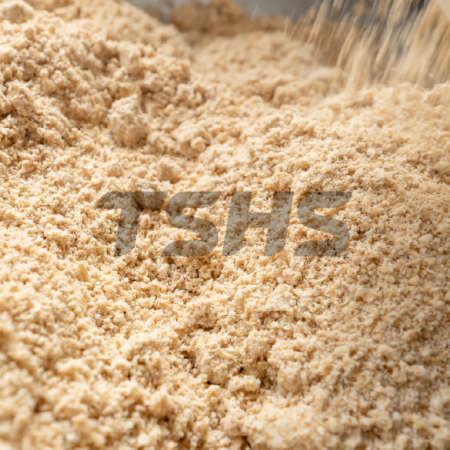
Turning Soybean Okara into High-Value Resources with a Customized Cyclone Dryer(Taiwan)
Creating Circular Economy Value from Agricultural and Food By-products with a Customized Cyclone Dryer
A Taiwan-based company specializing in green technology, environmental sustainability, and resource recycling partnered with Tsung Hsing (TSHS) to implement a customized Cyclone Hot Air Dryer. The solution established a large-scale soybean okara drying system and batch drying process, reducing the moisture content of soybean okara from approximately 76–78% to 10–12%. This customized drying solution created a stable soybean okara drying process, providing high-quality raw materials for animal feed additives, nutritional ingredients, and other value-added applications while promoting food by-product recycling, food by-product upcycling, and the circular economy.
【Background】Driving Innovation in Agricultural and Food Circular Economy
The customer is a Taiwan-based company specializing in the recycling and reuse of agricultural and food by-products. It primarily collects soybean okara, coffee grounds, tea residues, and other agricultural by-products, then processes these materials into livestock nutritional ingredients and animal feed additives. Some of the recovered materials are also used in health food and dietary supplement applications.
With the rapid development of circular economy practices and ESG initiatives, the customer planned to establish a large-scale soybean okara drying demonstration line. Through media exposure and public presentations, the project aimed to promote food waste recycling, food by-product reuse, and the development of a more sustainable food circular economy. By improving the value of okara recycling, reducing waste generated during food processing, and advancing food by-product upcycling, the customer sought to create a new model for sustainable resource recovery and circular economic development.
Soybean Okara Drying Is More Challenging Than It Appears
Drying soybean okara is not simply a matter of removing moisture. The real challenge lies in developing a reliable high-moisture material drying process capable of handling materials with high moisture content, high viscosity, and fine powder characteristics while maintaining stable, automated, high-volume production.
The customer previously relied on a batch cabinet dryer, with each drying cycle requiring approximately 10 to 13 hours. This process not only limited production capacity but also made it difficult to handle the increasing volume of incoming raw materials. In addition, soybean okara contains approximately 76–78% moisture, making it highly susceptible to fermentation and odor development if not dried promptly. This can negatively affect product quality, increase transportation costs, and reduce the value of downstream applications.
To overcome these challenges, the customer sought a customized soybean okara drying solution capable of rapid moisture reduction and large-scale production. The objective was to establish a fully automated soybean okara drying line that would significantly improve processing efficiency, support continuous operation, and maximize the value of food by-product recycling.

Customized Design for High-Moisture Powder Drying Applications
Unable to find a supplier capable of providing food by-product drying equipment that met its processing requirements and production capacity, the customer partnered with Tsung Hsing (TSHS) to develop a fully customized drying solution. The goal was to build a large-scale industrial soybean okara drying system tailored to its production needs. After evaluating multiple drying technologies, the TSHS engineering team considered the customer's available factory space, equipment layout, target production capacity, and the unique characteristics of soybean okara. Based on these factors, a Customized Cyclone Hot Air Dryer was selected as the core technology for the project.
Compared with fluidized bed dryers and rotary drum dryers, cyclone drying technology offers faster heat transfer, higher drying efficiency, and greater flexibility for batch production. Because soybean okara is a high-moisture powder material, this project involved more than the installation of a cyclone dryer. It delivered a complete powder drying system and a customized industrial drying solution specifically engineered for high-moisture material drying, enabling stable, efficient processing while supporting the customer's long-term food by-product upcycling strategy.

Two Months of Joint Testing to Develop the Optimal Drying Process
Before the project was officially awarded, Tsung Hsing (TSHS) invited the customer to bring soybean okara to its testing facility for product feasibility analysis. Using an existing Customized Cyclone Hot Air Dryer, the engineering team evaluated the material characteristics and verified the technical feasibility of the proposed soybean okara drying solution. Prior to final equipment delivery, TSHS and the customer conducted full-scale production acceptance trials using actual raw materials. Over a two-month period, the team completed more than 20 test runs, processing over five metric tons of soybean okara. Throughout the testing process, TSHS engineers worked closely with the customer to optimize equipment configuration, material recirculation, thermal conditions, conveying systems, and feed rates, ensuring that the drying process met the customer's production requirements.
After refining the operating parameters, the system successfully reduced the moisture content of soybean okara from approximately 76–78% to 10–12%. The results demonstrated that the Customized Cyclone Hot Air Dryer is highly effective for high-moisture powder drying, making it an ideal solution for soybean okara drying as well as a wide range of food by-product drying applications.

Customized Engineering: Every Optimization Improved Drying Performance
Because this project involved multiple equipment suppliers working together to build the complete production line, seamless system integration was essential. To establish a reliable powder drying system, the Customized Cyclone Hot Air Dryer had to be fully integrated with the customer's upstream and downstream processing equipment. Throughout the project, the Tsung Hsing (TSHS) engineering team continuously optimized the exhaust duct layout, powder separation system, material recirculation design, and airflow distribution. These engineering improvements helped reduce material recirculation, minimize product blockages, and enhance overall drying efficiency.
Equipment optimization was carried out in parallel with production trials. After each test run, the engineering team analyzed the results and refined the system accordingly. This iterative development process enabled the customized drying solution to gradually meet the customer's production requirements while delivering a more stable and efficient soybean okara drying process for food by-product drying applications.

Installation Challenge: Precision Installation of a Three-Story Customized Drying SysteM
The customized industrial drying system occupies approximately 15 × 12 meters and stands nearly three stories high, making installation a significant engineering challenge. Before delivery, the TSHS engineering team developed a comprehensive installation plan, including equipment layout, module dimensions, lifting procedures, and on-site assembly sequencing to ensure a safe and efficient installation process.
Once the equipment arrived at the customer's facility, the team discovered that the existing building height was insufficient to accommodate the installation. To overcome this constraint, part of the factory roof was temporarily removed, allowing the equipment modules to be lifted into position according to the pre-planned installation sequence. Like assembling a large-scale industrial structure, each module was installed precisely from the ground up, requiring close coordination and meticulous execution throughout the project. Although the original installation schedule was estimated at 25 days, the main installation was successfully completed in approximately 22 days, demonstrating TSHS's capability to deliver complex customized drying solutions while adapting efficiently to challenging on-site conditions.

Project Experience: Every Project Drives the Next Generation of Drying Solutions
While the final production capacity differed from the customer's initial expectations, the project provided Tsung Hsing (TSHS) with valuable engineering experience in high-moisture powder drying and reinforced the importance of conducting comprehensive product feasibility testing before equipment design and manufacturing.
Through this project, the TSHS engineering team gained deeper expertise in the critical design considerations for cyclone drying systems, including material recirculation, exhaust airflow management, powder separation, and overall system integration. These practical insights have further strengthened TSHS's ability to develop customized drying equipment for challenging materials with high moisture content and fine particle characteristics. Today, this experience enables TSHS to provide more comprehensive customized drying solutions for soybean okara drying, food by-product drying, and other high-moisture powder drying applications. By tailoring each system to the customer's raw material characteristics, production requirements, and plant layout, TSHS helps manufacturers improve processing efficiency while supporting long-term food by-product upcycling and circular economy initiatives.

Whether you are processing soybean okara, coffee grounds, tea residues, or other food by-products, Tsung Hsing (TSHS) can develop a customized drying solution based on your raw material characteristics, moisture content, production capacity, and plant layout. From Customized Cyclone Hot Air Dryers to complete industrial drying systems, we help manufacturers build efficient food by-product drying lines, maximize resource utilization, and create greater value through food by-product recycling, upcycling, and circular economy practices.
- Related Products
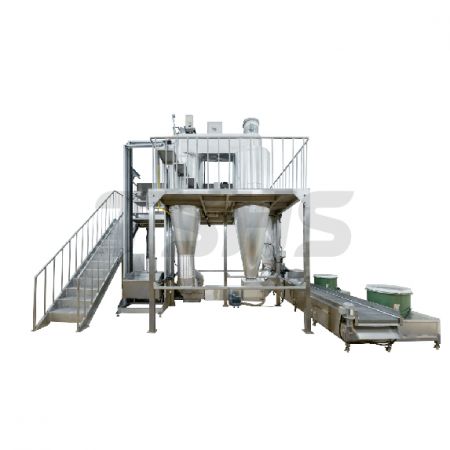
Air-flow Jet Dryer
Batch AirFlow Jet Dryer is an industrial food drying system designed for drying food powders,...
Details- Videos
FRYIN-201 Small-size Continuous Fryer
Enter the continuous production market at an affordable price. The "small volume, space-saving" FRYIN-201 fryer. Suitable for small food industry, central kitchens, restaurants, food stores, schools, etc.
 Download
 Hot Products

Over 50 Years of Turning Soybean Okara into High-Value Resources with a Customized Cyclone Dryer(Taiwan) Supply | TSHS
Based in Taiwan, since 1965, TSUNG HSING FOOD MACHINERY CO., LTD. is a Turning Soybean Okara into High-Value Resources with a Customized Cyclone Dryer(Taiwan) supplier in snack foods industry.
500 food processing production lines sold in 65 countries, TSHS is a food machine expert with over 60 years of experiences. CE certified, reasonably priced food processing machinery are industrial fryers, oil heating systems, seasoning tumblers, liquid mixer machines, liquid sprayer machines, etc.
TSHS has been offering customers high-quality food processing machines for green peas, nuts, potato chips, grain puffs and corn puffs, with total snack foods solutions. They represent trust, specialty, high-quality and safety specialization, which is where their name TSHS came from.