
Fried Dumpling Machine And Equipment Supplier | Processing Machinery & Turnkey Project Supply | TSHS
Industrial production of Samosa, Sambosa, Sambousek, Singara, Frozen Samosa, and Stuffed Fried Pastries requires more than standalone equipment. Stable product quality depends on the integration of dough preparation, filling processing, forming, frying, filtration, cooling, and packaging systems.Tsung Hsing (TSHS) evaluates product characteristics, target market requirements, and production capacity objectives to develop suitable process configurations for Indian food manufacturers and frozen snack producers. A Fried Dumpling Machine And Equipment Supplier | food processing machinery manufacturer since 1965. CE certified food processing machinery including deep fryers, oil heating systems, seasoning tumblers, food liquid mixer machines, food liquid sprayer machines in snack foods industry. Food machine product list including: Continuous Automatic Frying Machine, Continuous Frying Machine Oil Heating System, Potato Chips Production Line, Grain Puff Production Line, Kurkure Production Line, Green Pea Production Line, Inflate (Pellet) Production Line, Nuts Processing Machine, Noodle Snack Production Line, Continuous Dryer Machine Conveyor- Automatic Type. Continuous Hot Air Dryer Machine, Customized dryer machine system, Dryer systems Solution for Consultation, Seasoning system, De-oiling system, Frying system peripheral equipment With more than 60 years experience to provide more than 500 fried production line all over the world. TSUNG HSING can provide the whole plant planning, improve the process and increase production quality and quantity. We also provide regular machine examination. Tsung Hsing is worth your trust.
Fried Dumpling Machine And Equipment Supplier
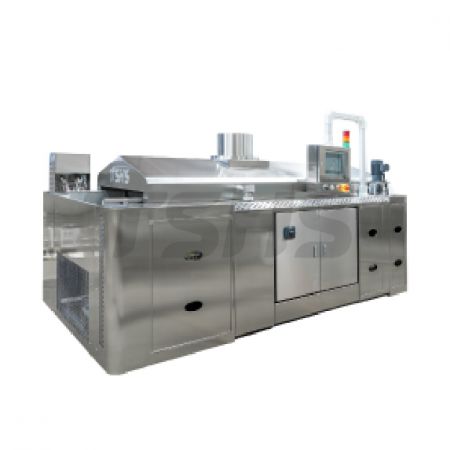
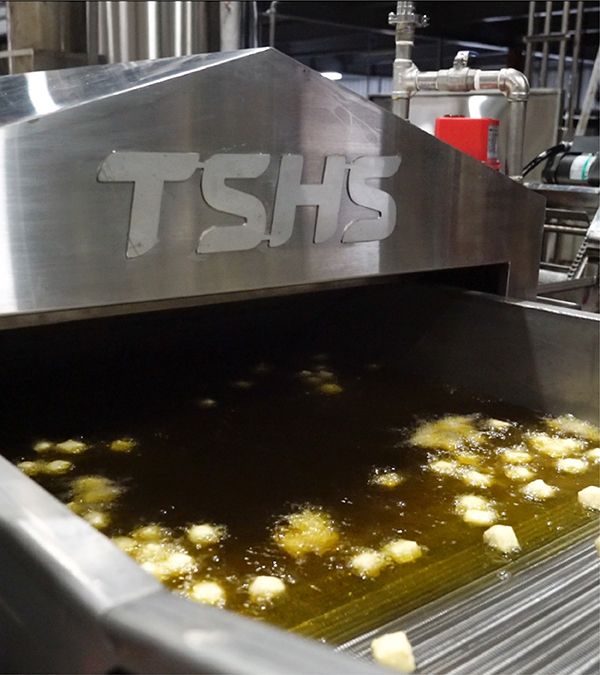
Samosa Fryer Machine
Fried Dumpling Fryer Machine
Industrial production of Samosa, Sambosa, Sambousek, Singara, Frozen Samosa, and Stuffed Fried Pastries requires more than standalone equipment. Stable product quality depends on the integration of dough preparation, filling processing, forming, frying, filtration, cooling, and packaging systems.
Tsung Hsing (TSHS) evaluates product characteristics, target market requirements, and production capacity objectives to develop suitable process configurations for Indian food manufacturers and frozen snack producers.
Fried Samosa Solution
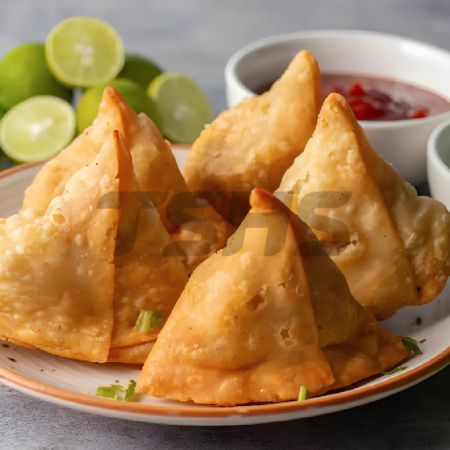
Samosa, also known as Sambosa, Sambousek, Sambusak, Sambuseh, Singara, Shingara, Singada, Punjabi Samosa, Aloo Samosa, Mini Samosa, Cocktail Samosa, Vegetable Samosa, Chicken Samosa, Meat Samosa, and Frozen Samosa, is one of the most widely consumed fried snacks across India, the Middle East, South Asia, Africa, Europe, and North America. These stuffed fried pastries typically consist of a wheat flour dough wrapper filled with potato, vegetables, meat, cheese, or spiced fillings before being fried to a crispy golden texture.
As demand for frozen convenience foods, ready-to-eat snacks, and foodservice products continues to grow, manufacturers are increasingly investing in industrial Samosa Production Lines, Sambosa Frying Systems, Frozen Samosa Processing Equipment, and Automatic Fried Pastry Production Solutions. However, maintaining consistent frying color, controlling oil absorption, preventing filling leakage, and ensuring high-volume production efficiency remain critical challenges in commercial-scale manufacturing.
Common Manufacturing Challenges in Samosa Production
● Uneven Frying Color
Different dough thicknesses and filling moisture levels can cause inconsistent frying results. This issue is commonly found in Samosa, Sambosa, Sambousek, Singara, and Frozen Samosa production.
● High Oil Absorption
Improper frying conditions may increase oil uptake, affecting product texture and shelf life. This is particularly important for Mini Samosa, Cocktail Samosa, and Frozen Sambosa products.
● Filling Leakage During Frying
Weak sealing or unstable forming processes can lead to filling leakage during frying, especially for products containing potato, meat, or cheese fillings.
● Frying Residue Accumulation
Broken pastry fragments and leaked fillings accelerate oil degradation and increase cleaning frequency.
● Labor Dependency
Traditional Indian Samosa and Sambousek production often relies on manual folding and sealing, limiting scalability.
● Product Consistency Control
Maintaining consistent shape, weight, filling ratio, and frying color becomes increasingly challenging as production capacity increases.
Recommended Equipment for Samosa Frying Line
Cooking
Other Processes
Samosa Forming Machine
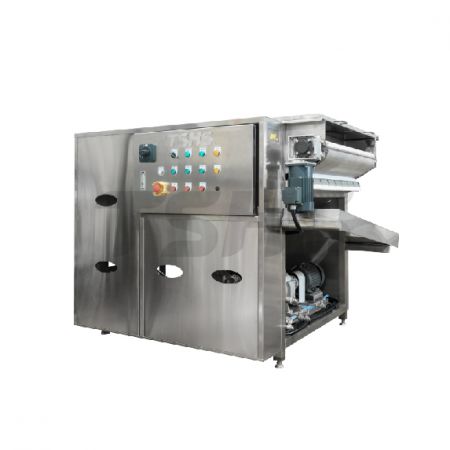
The Samosa Forming Machine is used in the forming stage after dough preparation and filling mixing. It automates the filling, folding, shaping, and sealing process to reduce manual operation and improve product consistency. For industrial production of Punjabi Samosa, Aloo Samosa, Mini Samosa, Cocktail Samosa, Sambosa, and Singara, stable forming quality is essential because sealing strength directly affects frying performance. If the product is not sealed properly, filling leakage may occur during frying, causing oil contamination, product deformation, and higher rejection rates.
Cooling Conveyor
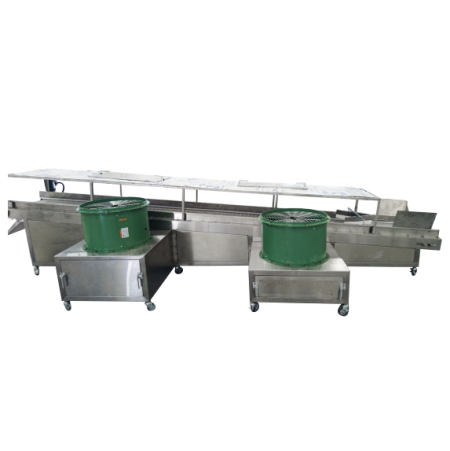
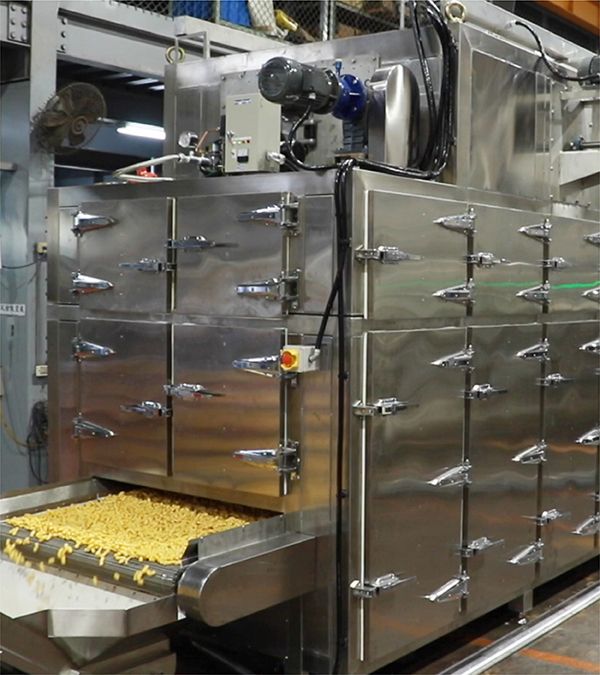
The Cooling Conveyor is used after frying to reduce product surface temperature before packaging, freezing, or further processing. For Frozen Samosa, Frozen Sambosa, and Ready-to-Cook Fried Snacks, proper cooling helps prevent moisture condensation inside the package and reduces the risk of texture softening. If products enter packaging or freezing too hot, steam may accumulate on the surface, causing soggy texture, ice crystal formation, or reduced product appearance after reheating.
A cooling conveyor also helps organize product flow between frying, inspection, freezing, and packaging. It supports continuous production planning by reducing product stacking, minimizing manual handling, and helping manufacturers maintain a more hygienic and efficient post-frying process.
The configuration, operating parameters, processing methods, and final production capacity of the automated production line should be determined based on the customer’s actual product formulation and target specifications, and verified through product testing.
Why choose the Samosa frying line equipment manufactured by TSHS
Food manufacturers choose Tsung Hsing (TSHS) because the company provides not only equipment supply but also production process support. With export experience across Asia, North America, the Middle East, and other international markets, TSHS understands the different requirements associated with Samosa, Sambosa, and frozen snack production.
TSHS assists customers with equipment customization, production line integration, factory layout planning, capacity evaluation, and product testing. Through pilot-scale trials and process optimization support, manufacturers can reduce development risks and improve project implementation efficiency.
FAQ Summary Of Samosa
Q1 What equipment is required for Samosa production?
Typical Samosa production lines include dough mixing equipment, filling preparation systems, Samosa forming machines, continuous frying systems, oil filtration equipment, cooling conveyors, and packaging systems. Equipment selection depends on product type and target capacity.
Q2 How to improve production efficiency of Samosa?
Automated forming equipment combined with continuous frying and oil filtration systems can reduce labor requirements, improve product consistency, minimize downtime, and increase overall throughput.
Q3 Which frying system is suitable for Samosa?
The FRYIN-K Continuous Frying System is suitable for Samosa, Sambosa, Sambousek, Singara, and other stuffed fried pastries. It provides stable temperature control, continuous production capability, and efficient oil management.
Applications
 Sambosa
 Samosa
 Sambousek
 Sambousek
 Sambusak
 Fried Dumpling
- Related Products
Continuous Inner-Furnace Fryer (FRYIN-K Series)
FRYIN-302K、FRYIN-402K
The FRYIN-K Series Continuous Fryer is engineered to comply with European CE safety regulations...
Details
Continuous Fine Filter
TsungHsing Food Machinery is a Continuous Fine Filter machine manufacturer and supplier. TsungHsing...
Details- CASE STORY
- Videos
FRYIN-201 Small-size Continuous Fryer
Enter the continuous production market at an affordable price. The "small volume, space-saving" FRYIN-201 fryer. Suitable for small food industry, central kitchens, restaurants, food stores, schools, etc.
 Download
 Hot Products

Over 50 Years of Fried Dumpling Machine And Equipment Supplier Supply | TSHS
Based in Taiwan, since 1965, TSUNG HSING FOOD MACHINERY CO., LTD. is a Fried Dumpling Machine And Equipment Supplier supplier in snack foods industry.
500 food processing production lines sold in 65 countries, TSHS is a food machine expert with over 60 years of experiences. CE certified, reasonably priced food processing machinery are industrial fryers, oil heating systems, seasoning tumblers, liquid mixer machines, liquid sprayer machines, etc.
TSHS has been offering customers high-quality food processing machines for green peas, nuts, potato chips, grain puffs and corn puffs, with total snack foods solutions. They represent trust, specialty, high-quality and safety specialization, which is where their name TSHS came from.
View our quality products Production Line, Continuous Automatic Fryer, Food Production Line, Continuous Fryer and feel free to Contact Us.